
Table of Contents
A Few Coarse Chin Hairs: Normal, or a Sign Worth Noticing?
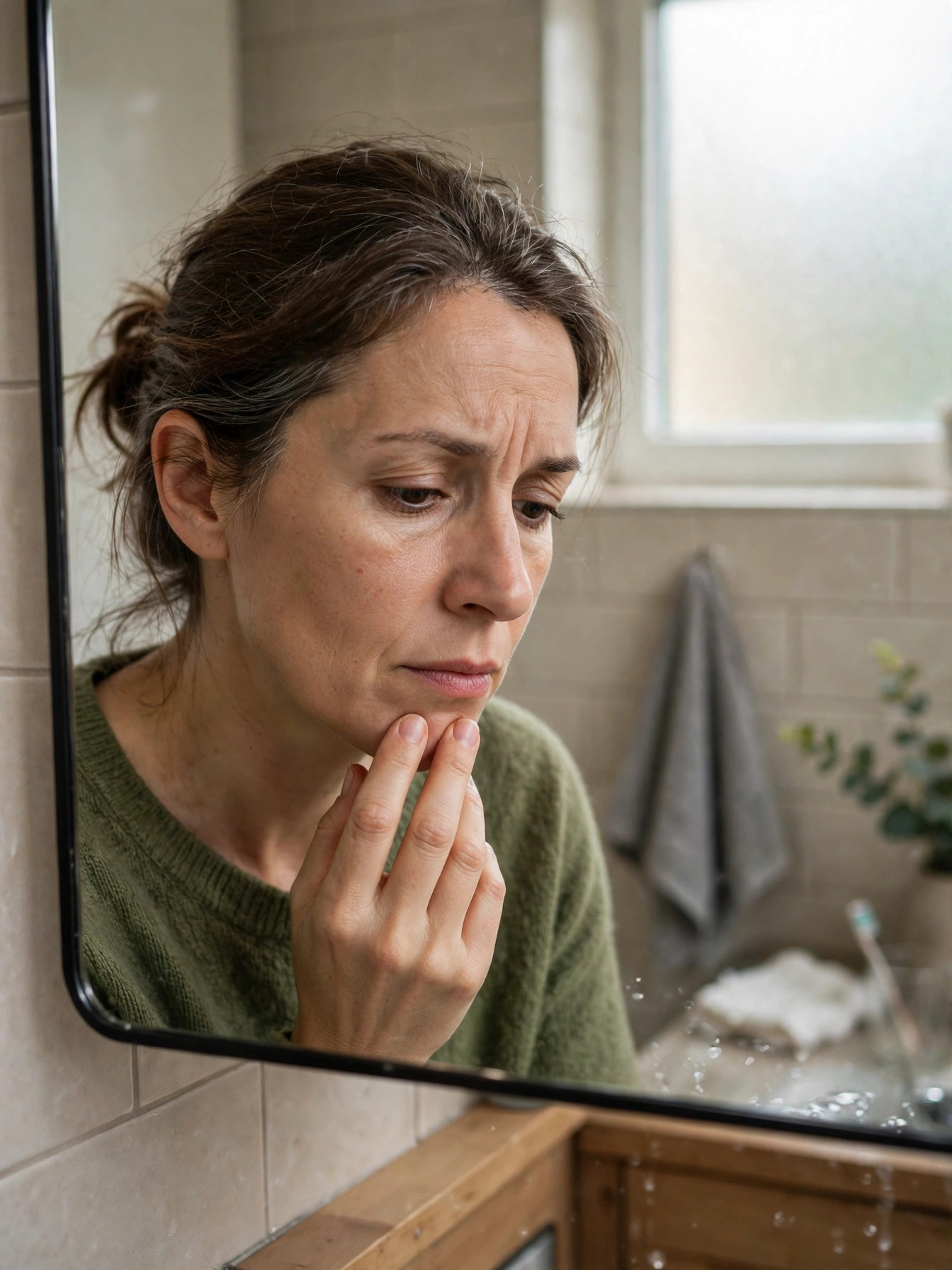
Almost every woman has noticed it at some point: a coarse, dark hair on the chin or jawline that was not there before, or a couple of stubborn hairs that keep coming back no matter how often they are plucked. For most women, it is nothing more than a cosmetic annoyance. But sometimes, depending on how fast the hair appears, where it grows, and what else is changing in the body, chin hair can be a genuine signal that something deeper is shifting.
The key is knowing how to tell the difference between ordinary hair growth and a pattern that deserves a closer look. This article lays out both sides plainly: what is normal, what is not, and when it makes sense to talk to a doctor.
First, the Normal Side: Why Chin Hair Happens at All
All women have facial hair. Most of it is vellus hair: fine, light, barely visible peach fuzz that covers the face. The hairs that cause concern are terminal hairs: thicker, darker, coarser strands, the same kind of hair that grows on the scalp or under the arms.
Whether vellus hair turns terminal depends largely on hormones, specifically androgens such as testosterone. Women produce androgens too, in smaller amounts than men, and the balance between estrogen and androgens determines how much coarse facial hair appears.
That balance shifts naturally with age. During perimenopause and menopause, estrogen levels fall while androgen levels stay relatively steady, creating a relative androgen dominance. The result is often a few coarse chin hairs, a little more jawline hair, or a dark hair or two on the upper lip. A handful of occasional, pluckable hairs in midlife is one of the most common and most benign changes there is.
Genetics plays a large role as well. Women of Mediterranean, Middle Eastern, South Asian, or Latin American descent tend to have naturally denser facial hair, and if your mother or grandmother dealt with chin hair, you are more likely to as well. In these cases, the hair is simply a family trait, not a symptom.
When Chin Hair Stops Being “Just Cosmetic”
Doctors start paying attention when the pattern changes. A few features turn ordinary chin hair into something worth evaluating:
- Sudden onset. Hair that appears quickly, over weeks or months, rather than gradually over years.
- Rapid progression. The hair keeps getting coarser, darker, or more numerous instead of staying stable.
- Male-pattern distribution. Coarse hair not just on the chin but also on the jawline, upper lip, chest, or abdomen.
- Company it keeps. Hair growth arriving alongside other changes, such as irregular periods, severe jawline acne, scalp hair thinning, unexplained weight changes, fatigue, or dark velvety patches of skin on the neck or underarms.
Any one of these on its own does not prove anything is wrong. Together, though, they form a pattern that points toward a hormonal cause, and that is when an evaluation is worthwhile.
The Hormonal Causes Doctors Look For
Polycystic Ovary Syndrome (PCOS)
PCOS is the most common hormonal cause of new coarse facial hair in women of reproductive age, affecting roughly 1 in 10 women in that age group. The ovaries produce more androgens than usual, which can drive chin and jawline hair along with irregular or missed periods, acne, scalp hair thinning, and insulin resistance. Many women with PCOS also struggle with weight gain that is hard to shift. Because PCOS affects fertility and long-term metabolic health, catching it early matters far beyond the mirror.
Menopause and Perimenopause
As estrogen declines in the years around menopause, the estrogen-to-androgen ratio shifts, and previously fine facial hair can turn coarse. This is gradual, usually limited to a few hairs, and rarely a sign of disease. It becomes worth mentioning to a doctor mainly if the change is abrupt or accompanied by other new symptoms.
Thyroid Problems
An underactive thyroid can lower levels of sex hormone-binding globulin (SHBG), a protein that binds androgens in the blood. With less SHBG, more androgen circulates freely, which can stimulate facial hair growth. Thyroid-related hair changes often arrive with fatigue, weight gain, dry skin, or feeling cold all the time.
Insulin Resistance
When the body becomes less responsive to insulin, insulin levels rise, and high insulin can stimulate the ovaries to produce more androgens. This is one reason chin hair sometimes appears alongside weight gain around the waist, dark skin patches on the neck or armpits, and difficulty losing weight. It is also why lifestyle measures that improve insulin sensitivity can sometimes slow new hair growth.
Adrenal Disorders and Medications
More rarely, adrenal gland disorders or tumors can raise androgen levels sharply, usually with rapid, severe symptoms. Certain medications can also contribute: minoxidil, anabolic steroids, some antipsychotics, and progestin-heavy contraceptives are all known to encourage facial hair in some women. If new chin hair starts soon after a medication change, that timing is worth telling your doctor.
Signs It Is Time to See a Doctor
Book an appointment if you notice any of the following:
- A rapid or steady increase in coarse facial hair
- Coarse hair spreading to several androgen-sensitive areas, not just the chin
- Irregular or missed periods, or periods that suddenly change
- Severe acne, especially along the jawline, that does not respond to usual care
- Unexplained weight changes or scalp hair loss
- Fatigue, or dark velvety skin patches on the neck, armpits, or groin
- Worry that a medication you take is causing the change
A first visit usually starts with a conversation and a blood panel. Depending on what that shows, a doctor may check total and free testosterone, DHEA-S, SHBG, and prolactin; thyroid function through TSH and free T4; metabolic markers such as fasting glucose, insulin, and lipids; and, if PCOS is suspected, a pelvic ultrasound. These tests are straightforward, and they usually narrow the cause down quickly.
What Can Actually Be Done About It
Management works best when it matches the cause. Treating the underlying condition often slows new growth on its own: thyroid hormone replacement for hypothyroidism, metformin for insulin resistance, or appropriate PCOS care, for example. Where hormones remain high, doctors sometimes prescribe anti-androgen treatments such as spironolactone or combined oral contraceptives, but these require medical supervision and are not do-it-yourself options. A prescription cream, eflornithine, can slow regrowth where it is applied.
For the hair itself, laser hair removal works best on dark hair against lighter skin and takes several sessions; electrolysis is slower but permanent and works on all skin and hair types. Gentle methods such as plucking, threading, or dermaplaning are fine for a few hairs, though aggressive waxing can irritate sensitive skin. What matters most is avoiding harsh, repeated irritation that leaves the skin inflamed or scarred.
Daily habits support all of the above. A balanced diet built around low-glycemic, anti-inflammatory foods, regular physical activity, and real stress management all help insulin sensitivity and hormone balance. Chronic stress raises cortisol, which can in turn nudge androgens upward. Supplements such as inositol or vitamin D are sometimes discussed for PCOS, but they belong under clinical guidance, not self-experimentation.
The Bigger Picture
Chin hair does not diminish anyone’s health, worth, or femininity, and for most women it never will be more than a minor grooming task. But the body communicates through small changes, and a sudden shift in facial hair is one of its louder whispers. Treating it as a possible signal rather than only a cosmetic problem is not vanity; it is how conditions like PCOS, thyroid trouble, or insulin resistance get caught early, when they are easiest to manage.
If the change feels unusual, or if it arrives with other symptoms, a gynecologist, endocrinologist, or dermatologist can give a personalized answer in a single visit. Listening to your body with curiosity instead of embarrassment is one of the simplest forms of self-care there is.