
Table of Contents
An Old Kitchen Herb, Brewed Into a Simple Tea
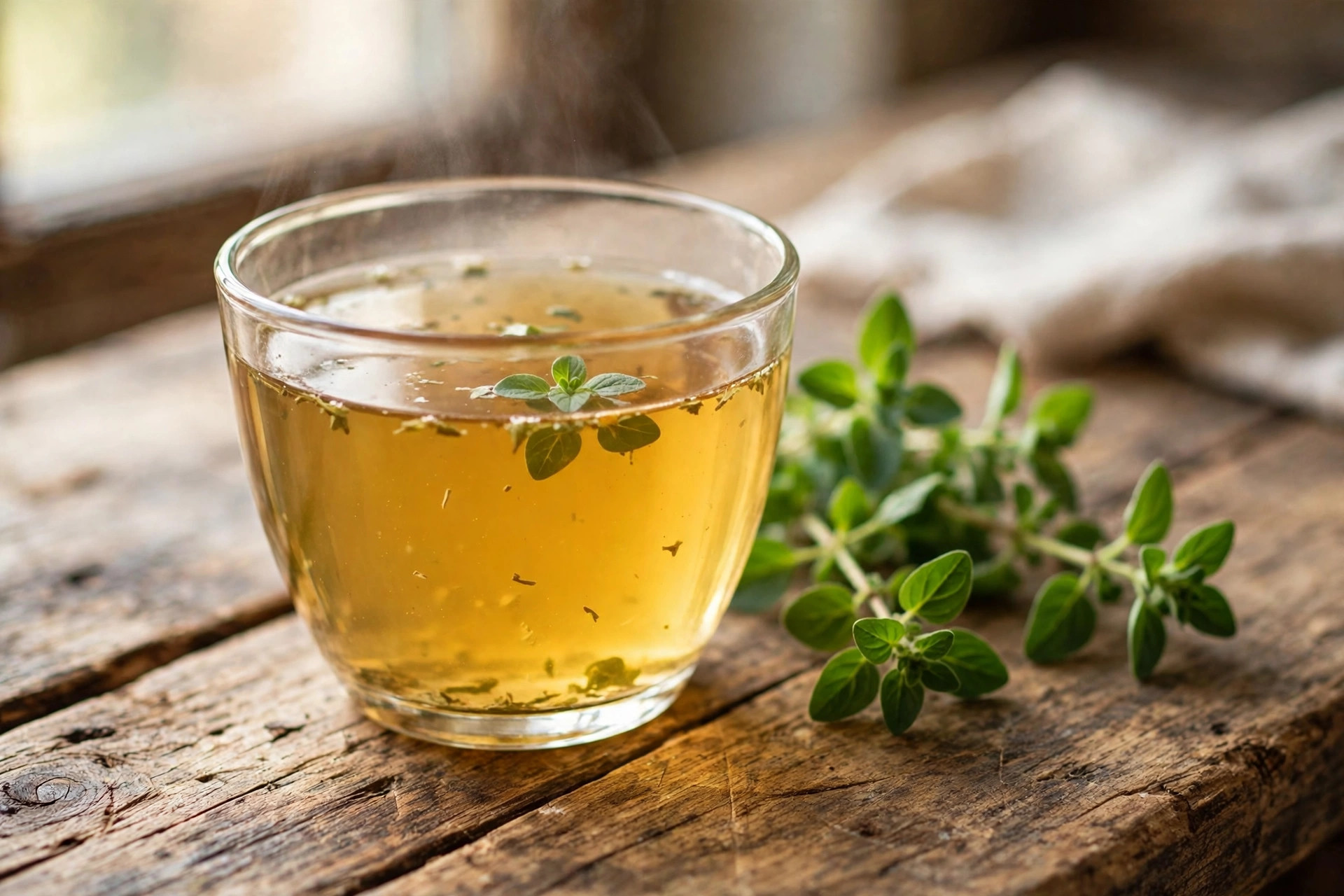
Long before oregano became a pizza topping, it was a medicine-cabinet herb across the Mediterranean and the Middle East. Families brewed its leaves into a warm, fragrant tea — not as a miracle cure, but as a comforting daily drink, especially when digestion felt sluggish or the seasons changed. That traditional use is still the honest way to enjoy oregano tea today: a gentle herbal drink that supports general wellness when used correctly, without the exaggerated promises social media loves to attach to it.
This is a tea you make in ten minutes with one leaf, or half a teaspoon of dried oregano, and a cup of hot water. Nothing fancy, nothing concentrated, nothing expensive. Here is what oregano actually offers, how to brew it properly, and where its limits are.
Why Oregano Has Been Brewed for Centuries
Oregano leaves naturally contain aromatic compounds, including carvacrol and thymol, along with antioxidants. In traditional use, that chemistry translated into a warm, slightly peppery tea that people reached for to support digestion, ease mild bloating or gas, and simply feel comforted during seasonal changes. It was a household habit, not a prescription — a cup after meals, made from the same culinary herb that went into the cooking pot.
That distinction is worth holding onto. Oregano tea is a food-based tradition. It is not a treatment for asthma, bronchitis, anxiety, insomnia, or chronic pain, and anyone telling you otherwise is selling a story, not a remedy. Enjoyed for what it is, though, it is a genuinely pleasant drink with a long, respectable history.
Traditional Oregano Leaf Tea Recipe
Ingredients
- 1 fresh oregano leaf, or 1/2 teaspoon dried oregano
- 1 cup hot water (hot, not boiling)
- Optional: honey or lemon, to taste
Directions
- Wash the fresh oregano leaf thoroughly.
- Place the leaf, or the dried oregano, in a cup.
- Pour hot (not boiling) water over it.
- Cover and steep for 5 to 10 minutes.
- Strain if needed.
- Add honey or lemon if desired, and drink warm.
Use water that has come off a rolling boil rather than bubbling water straight onto the leaves — gentler heat keeps the flavor smooth instead of harsh. One cup a day, after a meal, is the traditional rhythm. If you use honey, a teaspoon adds a little sweetness; lemon brightens the whole cup.
How to Use It Safely
- Once a day, after meals: That is the traditional pattern. More is not better with herbal teas.
- Culinary oregano only: Use the kitchen herb — fresh leaves or ordinary dried oregano from the spice jar.
- Skip concentrated oregano oil: Oregano oil is a concentrated product, far stronger than tea, and it does not belong in a daily home routine unless a professional advises it.
- Watch for allergies: Oregano belongs to the mint family. If you react to mint, basil, thyme, or similar herbs, be cautious, and stop if you notice itching, swelling, or breathing difficulty.
- Pregnancy: Medicinal-strength herbal use is not recommended during pregnancy without medical advice. A culinary sprinkle in food is a different matter from a daily medicinal brew.
What Oregano Tea Is Not
Honesty is part of any good remedy tradition, so let us be plain. This tea does not cure asthma or bronchitis. It does not treat anxiety or insomnia. It does not fix chronic pain. What it can do is offer a warm, aromatic, digestion-friendly drink as part of a balanced lifestyle — alongside proper nutrition, rest, and medical care when needed. Natural remedies support health; they do not replace doctors or treatments.
That framing also protects you from the hype cycle. When a post claims one herb fixes everything, the herb is not the problem — the claim is. Oregano does not need exaggeration. Its real story, centuries of kitchen use and a genuinely pleasant cup of tea, is good enough.
Easy Variations
- Lemon and honey: The classic finish — a squeeze of lemon and a teaspoon of honey soften the peppery edge.
- Ginger companion: Add a thin slice of fresh ginger to the cup while steeping for extra warmth.
- Mint blend: A few fresh mint leaves alongside the oregano make a cooler, fresher-tasting brew.
- Iced version: Brew it a little stronger, let it cool, and pour over ice with lemon for a summer drink.
Choosing and Storing Oregano
Fresh oregano has soft, oval leaves and a strong scent when rubbed between your fingers. If you grow it, snip what you need and wash it well. Dried oregano should smell pungent when you open the jar; if it smells like dust, it is past its best and your tea will taste flat. Store dried oregano in a sealed jar away from heat and light, and replace it every year or so for the best flavor.
Frequently Asked Questions
Can I drink oregano tea every day? Traditionally, one cup a day after meals is the pattern. It is a culinary herb tea, not a medicine to be taken in large or increasing doses.
Fresh or dried oregano — which is better? Both work. One fresh leaf equals roughly half a teaspoon of dried. Fresh tastes brighter; dried is more convenient and available all year.
Does oregano tea help digestion? Traditionally it was used to support digestion and ease mild bloating or gas. That is traditional use, not a proven treatment for digestive disease.
Can I use oregano oil instead? No — not as a substitute for tea. Concentrated oregano oil is much stronger and should only be used with professional guidance.
Is it safe during pregnancy? Medicinal herbal use during pregnancy needs medical advice first. If in doubt, skip the daily brew.
What does it taste like? Warm, peppery, and herbal — a little like thyme with a sharper edge. Honey and lemon round it out nicely.
Final Thoughts
Oregano is a valuable kitchen herb and a gentle traditional tea when used correctly. Brew it simply, drink it once a day after a meal, and enjoy it for what it is: a warm, fragrant habit with centuries of history behind it. Paired with good food, rest, and proper care when you are actually unwell, that is more than enough.