
Table of Contents
Can You Rinse Pasta With Weevils Out?
You open the pantry, grab the box of pasta for dinner, and there they are: tiny brown beetles crawling through the spaghetti. Your first thought is probably to throw the whole box away. But before you do, here is the honest answer: yes, in most cases you can rinse or sift pantry weevils out of dry pasta and still cook it safely. The key is how bad the infestation is, and knowing when the pasta is worth saving and when it belongs in the bin.
What Are Pantry Weevils, Anyway?
Pantry weevils are small beetles, usually 2 to 4 mm long, that live in dry foods like pasta, rice, flour, and cereal. The most common ones in pasta are grain weevils and rice weevils. They do not bite, they do not sting, and they do not carry diseases that affect people. They are a nuisance, not a danger.
Weevils usually arrive in food you buy from the store. Their eggs are microscopic and can already be inside a sealed bag of pasta or flour. Warm, undisturbed pantry shelves give them the perfect conditions to hatch and multiply. That is why a box that looked fine a month ago can suddenly be full of them.
Is It Safe to Eat Pasta After Removing the Weevils?
For a light infestation, yes. Once you have removed the visible weevils and cooked the pasta in boiling water, the pasta is safe to eat. Boiling water kills any weevils, larvae, or eggs left behind, and they are not toxic. People have eaten pasta this way for generations.
That said, safe and appetizing are two different things. If the idea of it puts you off, that is a perfectly good reason to throw the pasta away. Food you cannot enjoy is not worth saving. And if the infestation is heavy, with webbing, a dusty smell, or clumps of damaged pasta, throw it away without trying to save it.
How Bad Is It? Check Before You Decide
Pour the pasta into a large white bowl or onto a white tray. Weevils are dark, so they show up clearly against a light background. Look for:
- Live beetles crawling on the pasta or inside the box
- Tiny white larvae or fine webbing between the pieces
- A fine powdery dust at the bottom of the box
- Pasta pieces with small holes chewed in them
- A stale, musty, or dusty smell
If you see only a few beetles and the pasta looks and smells normal, the pasta is easy to save. If you see webbing, a lot of dust, or dozens of beetles, the infestation is heavy and the pasta should go in the bin.
How to Rinse Weevils Out of Pasta: Step by Step
- Work outside or over the sink. Weevils can fly or crawl away, so do this where strays are easy to clean up. Put the pasta in a large colander.
- Sift out the loose ones. Shake the colander gently over a white tray or the sink. Most adult weevils will fall through the holes or crawl out. Pick out any stragglers by hand.
- Rinse under cold running water. Run cold water over the pasta in the colander, tossing it with your hand so every piece gets rinsed. Weevils float or wash away in the water. For small pasta shapes like orzo or ditalini, use a fine mesh strainer so the pasta does not wash down the drain.
- Soak and check. Fill a large bowl with cold water, add the pasta, and stir. Any remaining weevils or larvae will float to the surface. Skim them off, then drain the pasta.
- Inspect again. Spread the rinsed pasta on a clean white towel or tray and look it over once more. If you still see weevils, repeat the rinse. Two rounds are usually enough.
- Cook as normal. Boil the pasta in a large pot of salted water. The heat finishes the job: anything still hiding in the pasta is killed in the boiling water. Drain and use as you normally would.
For long pasta like spaghetti, you can also break it into the pot after rinsing. For shapes with tubes or curls, like penne or fusilli, check inside the pieces while you rinse, since weevils sometimes hide in the hollows.
When to Throw the Pasta Away
Do not try to save pasta in these cases:
- The box has webbing, silk threads, or clumps stuck together
- There is a thick layer of powdery dust at the bottom
- The pasta smells musty, sour, or dusty
- A large share of the pieces have holes chewed in them
- You found larvae and beetles in several other packets at the same time
Put the pasta in a sealed bag before it goes in the bin, so the weevils cannot escape and spread to other food. Take the bin out promptly.
Clean the Pantry Before You Put Anything Back
Rinsing one box of pasta will not help if the weevils are still living in the pantry. Take everything off the shelves and check every packet of pasta, rice, flour, cereal, nuts, and dried beans. Throw away anything infested, and seal the rest in bags while you clean.
Vacuum the shelves thoroughly, including corners and cracks, then wipe them with hot soapy water. Pay attention to shelf edges and the gaps behind the shelves, where flour dust and crumbs collect. Let the shelves dry completely before putting food back. If you have a handheld steamer, a pass over the corners helps, but hot soapy water and a good vacuum are enough for most cases.
How to Keep Weevils Out of Your Pasta
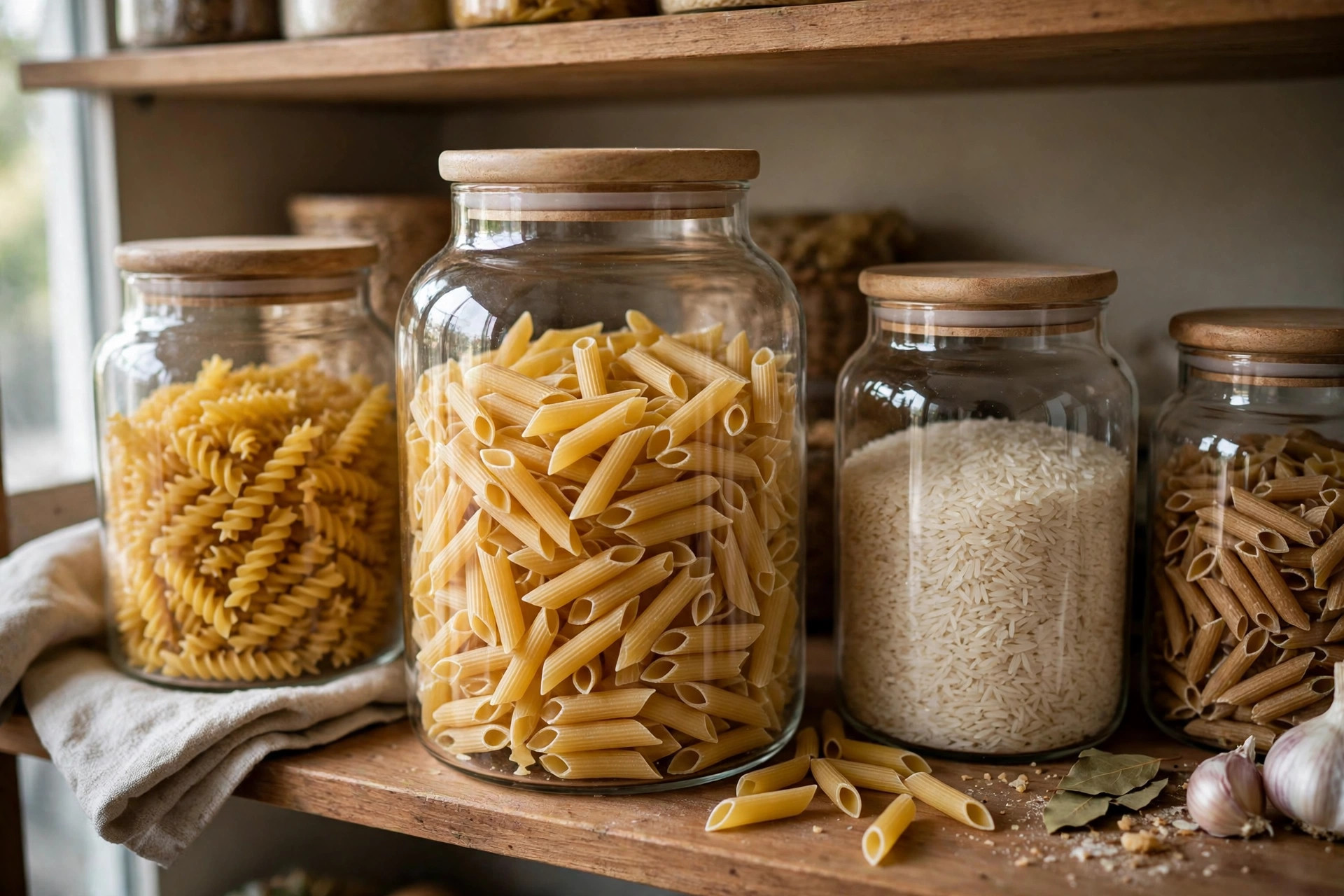
- Store pasta in airtight containers. Glass jars or hard plastic containers with tight lids work far better than the cardboard box or a folded bag. Weevils can chew through paper and thin plastic, but they cannot get into a sealed jar.
- Freeze new pasta for a few days. Put a new bag of pasta in the freezer for 3 to 4 days when you bring it home. The cold kills any eggs already inside, so they never get the chance to hatch.
- Buy smaller amounts. Pasta keeps a long time, but the longer it sits in the pantry, the more chance weevils have to find it. Buy what you will use in a few months rather than stocking up for a year.
- Use the oldest first. Put new packets behind older ones so you always use the oldest pasta first.
- Keep the pantry clean and dry. Wipe up spills, sweep up crumbs, and do not store pasta near damp or warm spots. Weevils like warmth and quiet, undisturbed shelves.
- Bay leaves on the shelf. Many people place a few dried bay leaves in the pantry or inside pasta containers. The smell is said to discourage weevils. It is not a cure on its own, but it costs nothing and does no harm.
- Check new packets. When you open a new bag of pasta or flour, look it over before you put it away. If you spot weevils, return it or throw it away instead of putting it on the shelf.
Frequently Asked Questions
Can weevils make you sick?
Pantry weevils do not bite, sting, or carry diseases that affect people. Eating pasta that had a few weevils, once they are removed and the pasta is cooked, is not known to cause illness. The main risk is the pasta being damaged or tasting stale.
Do weevils live in cooked pasta?
No. Boiling water kills weevils, larvae, and eggs. Cooked pasta that is stored properly will not attract them.
Can I just pick the weevils out instead of rinsing?
You can, if there are only a few. But rinsing is faster and more thorough, because it also removes larvae and dust you might miss by hand.
Will freezing kill weevils in pasta?
Yes. A few days in the freezer kills adult weevils, larvae, and eggs. Freezing works well as a prevention step for new packets, and it can also be used to treat a lightly infested packet before you rinse and cook it.
Why did my pasta get weevils when the box was sealed?
The eggs were most likely already inside the pasta when you bought it. They are too small to see, and they hatch when the pantry is warm. A sealed box does not keep them out if they were already in the food.
The Bottom Line
Yes, you can rinse weevils out of pasta, and for a light infestation the pasta is fine to cook and eat once it has been rinsed and boiled. Check the pasta first, rinse it well in a colander, cook it in boiling water, and throw it away if the infestation is heavy. Then clean the pantry and switch to airtight containers so the weevils do not come back.