
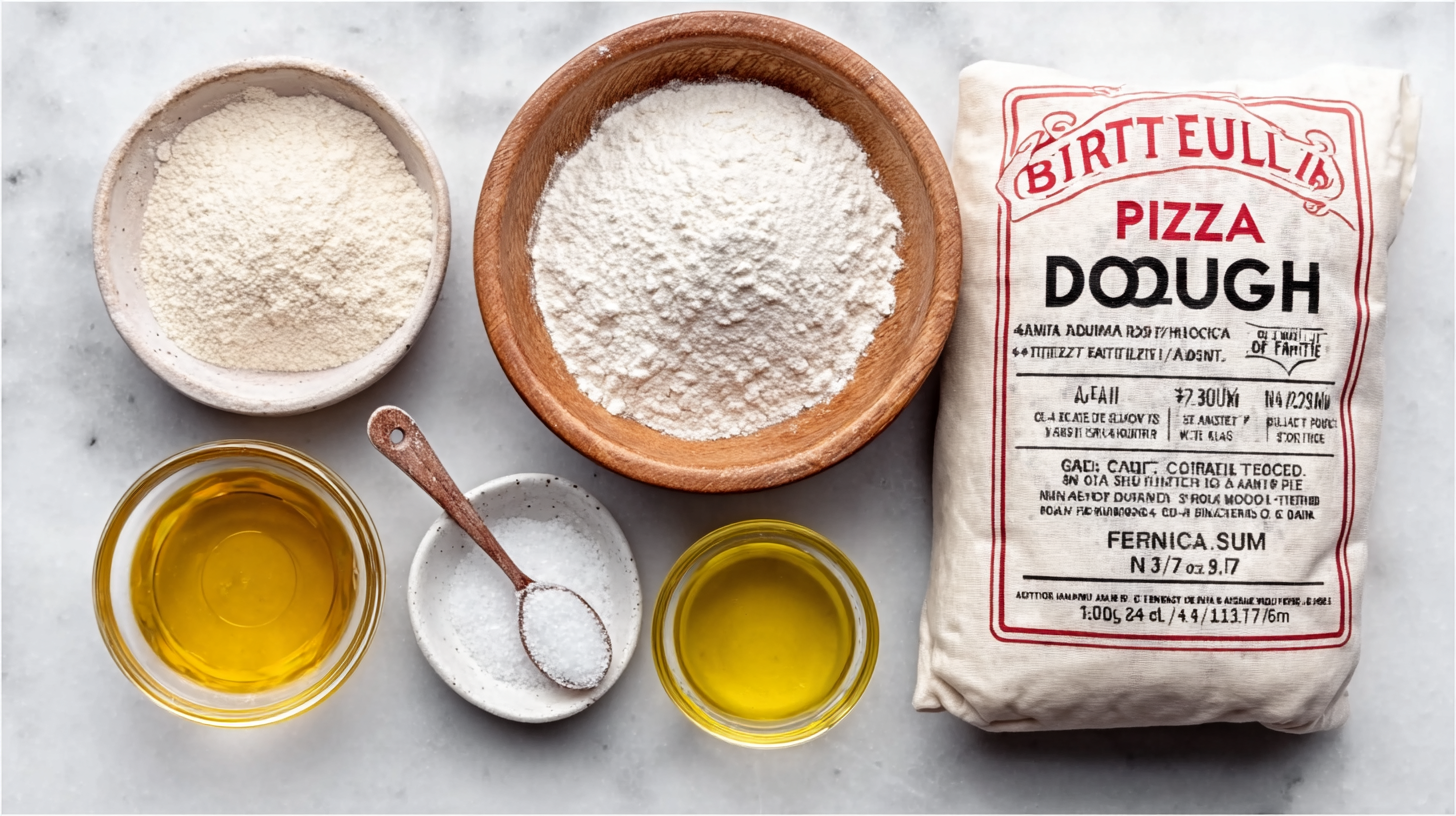
Birrittella Pizza Dough isn’t just any dough — it’s the foundation of a family tradition that stretches across generations of Italian-American cuisine. Developed by the Birrittella family, who first introduced their pies in New York, this dough is a testament to balance — between chew and crisp, airiness and structure.
Unlike fast-food pizza bases, Birrittella dough rests, ferments, and breathes — creating flavor depth, elasticity, and a beautiful charred bubble when stone-baked. And health-wise? This traditional dough, when made with quality ingredients and minimal additives, is far superior to commercial alternatives.
Table of Contents
Ingredient Table: Birrittella Pizza Dough Breakdown
| Ingredient Item | Exact Quantity (Metric + US Units) | Calories (per listed quantity) |
|---|---|---|
| All-Purpose Flour | 500g (approx. 4 cups) | 1820 kcal |
| Lukewarm Water | 325ml (1⅓ cups) | 0 kcal |
| Active Dry Yeast | 7g (2¼ tsp or 1 packet) | 21 kcal |
| Extra Virgin Olive Oil | 30ml (2 tbsp) | 238 kcal |
| Granulated Sugar | 5g (1 tsp) | 20 kcal |
| Fine Sea Salt | 10g (1¾ tsp) | 0 kcal |
| Semolina (for dusting) | 20g (2 tbsp) | 68 kcal |
🔢 Total Estimated Calories (Per Batch): 2167 kcal
(Divides into 2 large pizzas or 4 small ones — 541 to 1083 kcal per pizza depending on size.)
Nutritional Science: Breaking Down the Ingredients
Let’s peek into the science of what makes Birrittella dough both flavorful and functional.
1. Flour (Protein & Carbs)
The backbone of dough is gluten, a protein formed when wheat flour combines with water. All-purpose flour at 11–12% protein gives you enough elasticity without being too tough.
-
Energy Source: High in complex carbs for long-term energy.
-
Iron & B Vitamins: Key micronutrients in unbleached flour.
2. Water (Hydration)
Water activates the gluten and yeast. In Birrittella dough, the hydration level is ~65%, promoting open crumb structure and fermentation mobility.
3. Yeast (Fermentation Power)
Active dry yeast converts sugars into carbon dioxide and alcohol — the magical action that creates bubbles and that “yeasty tang.”
-
Adds vitamin B12, trace minerals, and gut-friendly compounds.
4. Olive Oil (Healthy Fats)
A hallmark of Mediterranean diets, extra virgin olive oil improves elasticity and gives the crust a buttery mouthfeel and golden edge.
-
High in monounsaturated fats, antioxidants, and polyphenols.
5. Sugar (Yeast Fuel)
Just 1 tsp feeds the yeast to begin fermentation. It’s metabolized during proofing, not left in the final crust.
6. Salt (Flavor + Structure)
Salt regulates fermentation, strengthens gluten bonds, and enhances flavor. Skipping it? Expect bland, over-proofed dough.
Step-by-Step: How to Make Birrittella Pizza Dough
Get ready to channel your inner pizzaiolo with this professional yet beginner-friendly recipe.
Tools You’ll Need:
-
Large mixing bowl
-
Digital scale (optional but recommended)
-
Dough scraper or spatula
-
Kitchen towel or plastic wrap
-
Pizza stone or steel
-
Rolling pin (optional)
Step 1: Activate the Yeast
In a small bowl, combine lukewarm water and sugar. Sprinkle yeast over the top. Let it sit for 10 minutes until foamy.
Tip: Water should be around 38°C (100°F) — warm, not hot.
Step 2: Mix the Dough
In a large bowl, combine flour and salt. Add the yeast mixture and olive oil. Mix with a spoon or hands until shaggy dough forms.
Bold move: Don’t overmix now. You’re aiming for integration, not kneading.
Step 3: Knead
Turn the dough onto a floured surface. Knead for 8–10 minutes until it’s smooth and elastic. Use a bench scraper to assist.
Step 4: First Rise (Bulk Fermentation)
Place the dough in a lightly oiled bowl. Cover with a damp cloth. Let rise for 1.5–2 hours at room temperature, or overnight in the fridge.
Pro tip: A long cold ferment (24–48 hrs) adds deep flavor complexity.
Step 5: Divide and Rest
Punch down the dough and divide it into 2 equal balls. Let them rest 30 minutes under a towel.
This step allows gluten to relax before shaping.
Step 6: Shape the Dough
Dust your work surface with semolina. Stretch each dough ball into a 10–12 inch circle using your fingertips — never a rolling pin.
Look for air bubbles and a 1 cm edge (the cornicione).
Step 7: Bake Like a Pro
-
Preheat oven to 260°C (500°F) for 45 minutes with a pizza stone inside.
-
Transfer your topped dough to the hot surface.
-
Bake for 6–8 minutes or until the crust is puffed and golden.
Birrittella pro touch: Brush the outer crust with a mix of olive oil and garlic salt just before baking.
Calorie Optimization: 5 Ways to Make It Healthier
Want your pizza night guilt-free? Try these modifications without compromising flavor.
-
Use Whole Wheat Flour: Replace up to 50% of the flour with whole wheat — adds fiber and lowers glycemic index.
-
Swap Sugar for Honey or Omit: For low-carb diets, the dough still ferments without sugar; it’ll just take longer.
-
Reduce Oil to 1 tbsp: Still gets that light richness with half the fat.
-
Add Flaxseed or Chia: Stir in 1 tbsp ground flax for omega-3s and fiber.
-
Portion Smarter: Make mini pizzas (150g dough) for built-in portion control.
FAQ: Dough Secrets Uncovered
Can I freeze Birrittella dough?
Yes! After the first rise, divide, ball, and wrap each in plastic. Freeze up to 3 months. Thaw overnight in the fridge before using.
Can I make it vegan?
It already is! No dairy or animal products are used in the dough. Just check your toppings.
What’s a good gluten-free substitution?
Try a blend of gluten-free flour + psyllium husk for elasticity. Bob’s Red Mill GF mix + 1 tbsp psyllium works well. Proofing time may vary.
How long does the dough keep?
-
In fridge: Up to 3 days (flavor improves over time).
-
Room temp: Use within 4–6 hours.
-
Frozen: Up to 3 months.
Can I add herbs or garlic?
Absolutely. Add 1 tsp dried oregano, basil, or garlic powder into the flour mix for an aromatic twist.
Cultural Impact: More Than Just Dough
What makes Birrittella dough special isn’t just its chemistry — it’s a cultural legacy. This dough style traces back to southern Italy’s traditional pizza tonda and was refined in the New York pizzerias of the 20th century. You’re not just baking bread — you’re continuing a story, one that begins with immigrant families and ends at your dining table.
Sensory Snapshot: What to Expect
-
Touch: Soft, supple dough that springs back
-
Smell: Earthy flour, tangy fermentation, hint of olive richness
-
Taste: Balanced — chewy interior with a crispy bite
-
Sight: Leopard-spotted crust, golden edges, airy bubbles
-
Sound: A satisfying crunch with each bite — the “Birrittella crackle”
Final Thoughts: Dough that Makes Memories
Birrittella Pizza Dough is more than a recipe — it’s a canvas for creativity and connection. Whether you’re crafting a classic Margherita or experimenting with roasted veggies and burrata, this dough rises to the occasion — literally and metaphorically.
From hydration to fermentation, from tradition to taste — now you hold the keys to pizza perfection.