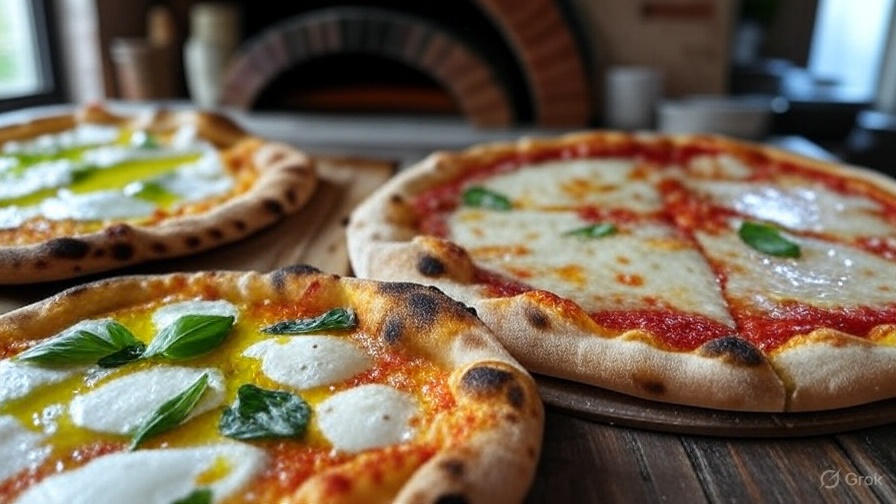
Both Pinsa vs Pizza are beloved Italian creations, but while pizza reigns supreme in fast-food chains, Pinsa is the rising star in artisan kitchens. With deep cultural roots and a healthier twist, these two doughy delights offer distinct textures, nutritional profiles, and preparation techniques that set them worlds apart.
Table of Contents
Ingredient Breakdown: Pinsa vs Pizza (Per Medium Dough Base)
| Ingredient Item | Exact Quantity (Metric + US) | Calories (Approx) |
|---|---|---|
| Wheat Flour (Tipo 00) | 200g (1⅓ cups) – Pizza only | 720 kcal |
| Rice Flour | 50g (¼ cup) – Pinsa only | 180 kcal |
| Soy Flour | 25g (2 tbsp) – Pinsa only | 90 kcal |
| Spelt Flour | 25g (2 tbsp) – Pinsa only | 90 kcal |
| Instant Yeast | 1 tsp (3g) | 10 kcal |
| Olive Oil | 1 tbsp (15ml) | 120 kcal |
| Water (lukewarm) | 180ml (¾ cup) | 0 kcal |
| Salt | 1 tsp (5g) | 0 kcal |
| Tomato Sauce (for topping) | 60g (4 tbsp) | 25 kcal |
| Mozzarella Cheese | 100g (1 cup shredded) | 280 kcal |
| Fresh Basil (optional) | 5 leaves | 2 kcal |
| Garlic Powder | ¼ tsp | 2 kcal |
| Crushed Red Pepper Flakes | ¼ tsp | 1 kcal |
Total Calories (per base with toppings):
-
Pizza: ~1,157 kcal
-
Pinsa: ~945 kcal
Introduction: Cultural Origins & Modern Health Relevance
The Pizza, hailing from Naples, has conquered the global palate with its chewy base and bubbling mozzarella. It’s often indulgent—heavy on cheese and saturated fats—but undeniably iconic.
Enter Pinsa Romana, the ancient Roman revival that’s turning heads in modern kitchens. Lighter, crispier, and easier to digest, pinsa is made using a blend of flours (rice, soy, and spelt) and a high-hydration dough that’s fermented longer.
Health Benefits of Pinsa:
-
Lower gluten content
-
Fewer carbs and fats
-
Improved digestibility
-
Crispier crust with air pockets
Pinsa is more than a pizza alternative—it’s a gastronomic evolution, bridging tradition and wellness.
Science: Nutritional Comparison of Core Ingredients
Let’s dig into the science of dough. What makes pinsa healthier?
1. Flour Composition
-
Pizza uses pure wheat flour, which is high in gluten and carbs.
-
Pinsa incorporates rice (low glycemic), soy (high protein), and spelt (fiber-rich)—a blend that reduces gluten load and glycemic index.
2. Fermentation Time
-
Pinsa dough ferments for up to 72 hours, allowing enzymatic breakdown of starches and proteins. This makes it gentler on the stomach.
3. Hydration Ratio
-
Pinsa has up to 80% hydration, compared to pizza’s 50–60%. The result? A lighter, airier crust with fewer calories per bite.
4. Fat and Caloric Density
-
Traditional pizza can use 2x the cheese and oil, leading to higher saturated fats.
-
Pinsa usually uses less cheese and more vegetables, reducing fat content.
Step-by-Step Cooking Instructions
Preparing Pinsa Dough (Pro Techniques)
Ingredients:
-
50% rice flour, 25% soy flour, 25% spelt flour
-
Instant yeast, salt, olive oil, and lukewarm water
Steps:
-
Combine dry ingredients in a large mixing bowl.
-
Slowly add water while mixing—ensure full hydration.
-
Add olive oil and knead until smooth.
-
Cover and cold ferment for 48–72 hours in the fridge.
-
On baking day, let dough rest at room temp for 2 hours.
-
Gently stretch into an oval shape (don’t roll).
-
Preheat oven to 250°C (480°F) with a pizza stone inside.
-
Prebake the base for 4 minutes before adding toppings.
Making Classic Pizza Dough
Steps:
-
Mix wheat flour, yeast, salt, and water until it forms a dough.
-
Knead for 10 minutes until elastic.
-
Let rise for 1–2 hours in a warm area.
-
Stretch into a round shape, add toppings.
-
Bake at 250°C for 8–10 minutes until golden and bubbly.
Pro Tip: Always bake with a preheated pizza stone or steel for maximum crust crispiness.
Calorie Optimization: 5 Smart Tweaks for a Healthier Slice
Want your pizza or pinsa to be guilt-free? Here’s how:
1. Use a Cauliflower or Zucchini Base
-
Especially great for gluten-free diets.
2. Reduce Cheese Quantity
-
Opt for part-skim mozzarella or plant-based cheese.
3. Pile on Veggies
-
Bell peppers, mushrooms, arugula, onions, and tomatoes add volume, fiber, and nutrients with minimal calories.
4. Skip Processed Meats
-
Use grilled chicken, tofu, or legumes instead of pepperoni or sausage.
5. Brush with Olive Oil, Not Butter
-
Keeps flavor rich while using heart-healthy fats.
FAQ: Your Pinsa vs Pizza Questions Answered
How long can I store leftover pinsa or pizza?
-
Refrigerate in an airtight container for up to 3 days.
-
Reheat at 200°C (400°F) to crisp the crust again.
Can I freeze the dough?
-
Yes, both pinsa and pizza dough freeze well for up to 3 months. Thaw in the fridge overnight.
What’s the best flour substitute for gluten-free versions?
-
For pizza: Almond or chickpea flour
-
For pinsa: Gluten-free rice blend + xanthan gum
Is pinsa suitable for weight loss diets?
-
Yes, especially when topped with lean proteins and vegetables and made with minimal oil.
Can I make either without yeast?
-
Yes, substitute with baking powder or sourdough starter, but note the texture will change.
Final Thoughts: Which One Wins?
If you’re after nostalgia, gooey cheese pulls, and robust flavor, pizza hits the spot. But if you’re looking for something lighter, more digestible, and equally satisfying, pinsa takes the crown.
From a nutritionist’s lens, pinsa is better suited for modern dietary goals: high fiber, low fat, lower gluten, and fewer calories per slice. But in the end, both can be tailored to fit a healthier lifestyle—it’s all about smart choices and mindful toppings.
Quick Comparison Recap
| Feature | Pizza | Pinsa |
|---|---|---|
| Dough Base | Wheat | Rice, soy, spelt |
| Fermentation | 1–2 hours | 48–72 hours |
| Hydration | Medium | High (80%) |
| Texture | Chewy | Crispy + Airy |
| Calories (per base) | ~1,157 kcal | ~945 kcal |
| Digestibility | Medium | High |
| Gluten Load | High | Low |
Now it’s your turn—try making both at home and see which one becomes your go-to comfort bite. Whether you’re team pizza or a pinsa convert, this culinary face-off proves that tradition and innovation can beautifully coexist in your kitchen.