
Table of Contents
The Claim Going Around About Cloves
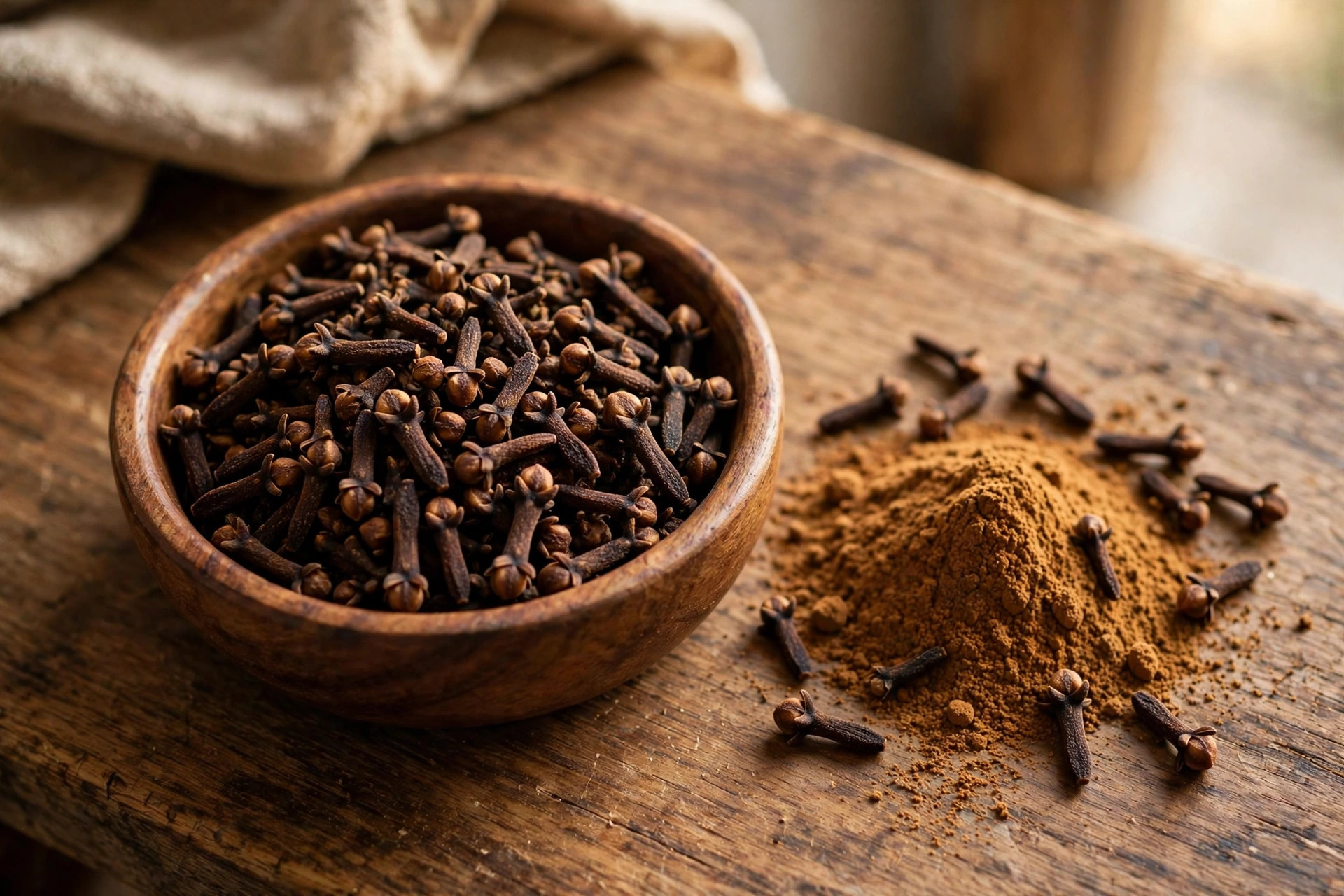
You may have seen the posts: a photo of whole cloves and ground clove powder, next to a bold claim that cloves are “the vitamin your body lacks” when your legs or bones ache. It sounds wonderfully simple — one kitchen spice, one missing piece, pain gone. But that claim does not hold up. Cloves are not a vitamin. They do not diagnose a deficiency. They do not cure leg pain, and they do not fix bone pain.
That does not mean cloves are useless. Far from it. Cloves are one of the world’s oldest and most useful spices, with a warm, sharp flavor and a long history in cooking, tea, and traditional wellness routines. The trick is knowing what cloves can actually do, what they cannot do, and where the real risks sit — especially with concentrated clove oil, which is far stronger than the spice in your kitchen jar. Here is the honest picture.
What Cloves Actually Are
Cloves are the dried, unopened flower buds of a tropical evergreen tree. Each small, dark, nail-shaped bud is packed with aromatic oils, and the most important of these is a plant compound called eugenol. Eugenol is what gives cloves their intense smell, their numbing warmth on the tongue, and much of their traditional reputation. A pinch of ground cloves carries a lot of flavor, which is why recipes use them in small amounts.
In the kitchen, cloves show up everywhere: in rice dishes and curries, in baked goods and spice blends, in mulled drinks, and in teas. They have also been used for generations for oral freshness — chewing a whole clove or rinsing with clove tea is an old household habit — and dentists have historically used eugenol in dental materials. That history is real, but it is a long way from “cloves cure pain,” and the difference matters.
What Cloves May Offer
- Rich flavor for very few calories: A pinch or two transforms a dish without adding sugar, fat, or salt.
- Antioxidant compounds: Like many spices, cloves contain plant compounds that show antioxidant activity in laboratory studies. That is interesting, not a treatment.
- A warming, aromatic tea: A couple of whole cloves steeped in hot water make a fragrant, soothing drink that many people enjoy in cold weather.
- Oral freshness tradition: The strong aroma and mild numbing feel are why cloves have been chewed or brewed for mouth freshness for centuries.
- Cooking versatility: Whole cloves perfume slow-cooked dishes and can be fished out before serving; ground cloves blend into baking, sauces, and spice mixes.
The Part People Get Wrong
Leg pain and bone pain have many possible causes — overuse, injury, circulation problems, joint issues, nerve trouble, and more. No spice can sort out which one applies to you, and no spice replaces an examination when pain is persistent, severe, or comes with swelling, weakness, or numbness. The viral claim skips all of that and points at a single kitchen ingredient instead. If your legs or bones hurt regularly, that is a question for proper testing, not a spice jar.
The same caution applies to the word “vitamin.” Vitamins are specific nutrients with defined roles, and cloves are not one of them. Calling a spice a vitamin is marketing language, not science, and it misleads people into delaying care that might actually help.
Where the Real Risks Are
Used as a cooking spice, cloves are ordinary food and the amounts in recipes are small. The risks climb when people move from the spice to concentrated products — especially clove oil — or start taking large daily doses because a post told them to.
- Clove oil is strong: Undiluted clove oil can irritate the mouth, throat, and skin, and it can cause a burning or numbing feeling that lingers. It should never be swallowed straight or applied undiluted.
- Large amounts strain the liver: Eugenol in very high doses has been linked to liver irritation. This is a dose problem — a pinch in food is not the same as spoonfuls of oil or extract every day.
- Bleeding risk: Cloves may slow blood clotting, so people who take blood-thinning medication, or who are about to have surgery or dental work, should be careful with concentrated clove products.
- Allergies and sensitivity: Some people react to cloves with mouth irritation, rash, or breathing difficulty. Stop use if any of that appears.
- Children: Clove oil is not for children. Even small amounts of concentrated oil can be dangerous for a child, so keep it out of reach entirely.
- Pregnancy and breastfeeding: Culinary amounts in food are normal, but concentrated clove supplements and oils are a different matter and worth avoiding without professional guidance.
How to Use Cloves Sensibly
The safest way to enjoy cloves is the oldest one: as food. Add one or two whole cloves to a pot of rice, a curry, or a stew, and remove them before serving. For tea, steep two or three whole cloves in hot water for five to ten minutes, optionally with ginger or cinnamon, and drink it occasionally rather than as a forced daily medicine. If a recipe calls for ground cloves, a quarter teaspoon is usually plenty — the flavor is powerful and a little goes a long way.
Buy whole cloves when you can and grind only what you need; ground cloves lose their aroma much faster. Store them in a sealed jar away from heat and light. And if you are considering clove oil, capsules, or extracts for a health reason, remember that these are concentrated products with real side effects — they deserve the same caution as any strong remedy, not the casual attitude of a cooking spice.
What to Know First — The Short Version
- Cloves are a spice, not a vitamin, and not a cure for leg or bone pain.
- Cooking amounts are ordinary food; concentrated oil and extracts are a different category with real risks.
- Never swallow undiluted clove oil or give it to children.
- Be careful with concentrated clove products if you take blood thinners or have liver problems.
- Persistent, severe, or unusual pain deserves proper evaluation, not a home remedy.
Frequently Asked Questions
Are cloves a vitamin? No. Cloves are a spice made from dried flower buds. They contain plant compounds including eugenol, but they are not a vitamin and do not treat a vitamin deficiency.
Do cloves cure leg pain or bone pain? There is no evidence that they do. Pain has many causes, and persistent pain needs proper evaluation to find the real one.
Is clove tea safe to drink every day? An occasional cup made with a few whole cloves is a normal culinary use. Turning it into a heavy daily routine with large amounts, or adding clove oil, is where the risks start.
Can I put clove oil on a sore tooth? Clove oil has a long traditional association with dental care, but undiluted oil can burn and irritate the mouth. Dental pain should be seen by a dentist rather than managed with home oil applications.
Are whole cloves better than ground? Whole cloves keep their aroma longer and are easy to remove from cooked dishes. Ground cloves are convenient for baking but go stale faster, so buy small amounts.
Can children have cloves? Cloves as a cooking spice in food are normal. Clove oil, however, should be kept away from children entirely.
Final Thoughts
Cloves deserve their place in the kitchen — few spices give so much warmth and aroma from such a small amount. They simply do not deserve the miracle claims being attached to them online. Enjoy them in your cooking and your tea, respect the strength of the concentrated oil, and leave the diagnosis of real pain to proper testing. That honest middle ground is where cloves are genuinely at their best.