
Table of Contents
A Cake That Tastes Like the Holidays Themselves
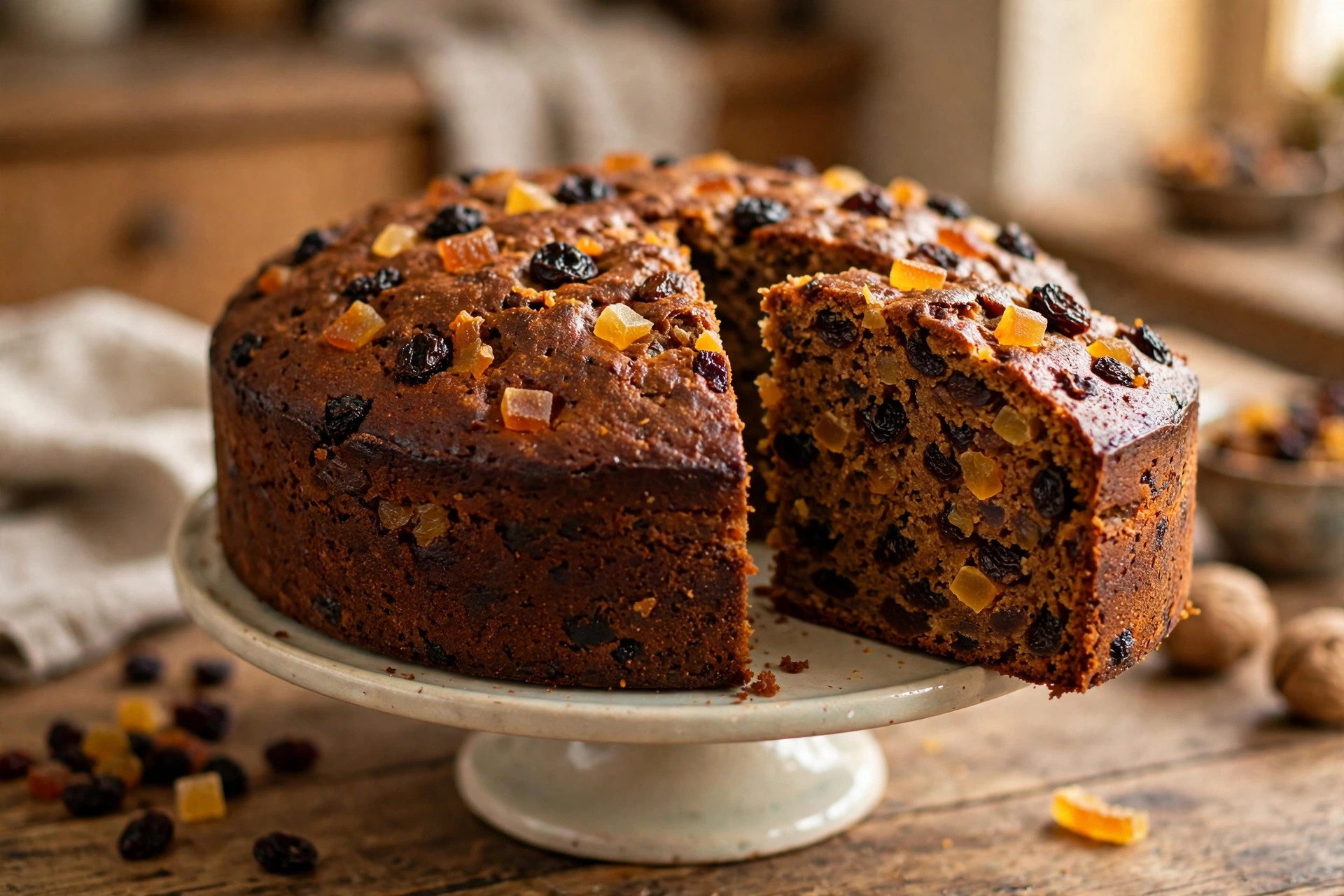
There is a reason fruitcake has survived every baking trend of the last hundred years. When it is made properly, it is nothing like the dry, joke-worthy brick people love to complain about. A real traditional fruitcake is dense, dark, buttery, and so packed with soft, juice-plumped fruit that every slice feels like a celebration on its own. This version keeps things classic and simple: no alcohol, just orange juice to soak the fruit, warm spices, and a slow bake that turns the whole thing into a tender, fragrant loaf that only gets better after a day of rest.
It takes a little patience — the fruit needs time to soak and the cake needs a good two hours in a low oven — but the hands-on work is easy, and the result is a cake that serves a crowd. One deep 8-inch round cake cuts into about 14 generous slices, and each slice comes in at about 360 calories with 5 grams of protein. Serve it with tea, coffee, or a spoonful of whipped cream, and you have the kind of dessert people ask about long after the plates are cleared.
Why You Will Love This Fruitcake
- Truly moist, never dry: Soaking the dried fruit in juice before baking is the whole secret — the fruit stays soft and the crumb stays tender.
- Packed with fruit in every bite: Raisins, currants, dates, and candied orange peel mean no sad, empty slices.
- Make-ahead friendly: Bake it a day early and the flavors blend beautifully overnight.
- Easy to customize: Swap in cranberries, apricots, figs, or your favorite nuts without changing the method.
- Beautiful on the table: A dark golden crust, a fruit-studded interior, and an optional glossy jam glaze make it look as good as it tastes.
Ingredients
For the dried fruit mixture
- 1 1/2 cups (225 g) raisins
- 1 cup (150 g) currants
- 1 cup (150 g) chopped dates or mixed dried fruit
- 1/2 cup (75 g) candied orange peel
- 1/2 cup (120 ml) orange juice or apple juice, for soaking
- 1 teaspoon lemon zest (optional)
For the cake batter
- 2 cups (250 g) all-purpose flour, spooned and leveled
- 3/4 cup (170 g) unsalted butter, softened to room temperature
- 3/4 cup (150 g) light or dark brown sugar
- 4 large eggs, at room temperature
- 1 teaspoon baking powder
- 1 teaspoon ground cinnamon
- 1/4 teaspoon ground nutmeg
- 1/4 teaspoon ground ginger
- 1/4 teaspoon salt
- 2 teaspoons vanilla extract
- 1 tablespoon orange zest
- 1/2 cup (60 g) chopped walnuts or pecans (optional)
For the optional finish
- 2 tablespoons warm apricot jam, for a glossy glaze
- 2 tablespoons extra chopped nuts, for decorating
- 1 to 2 tablespoons powdered sugar, for dusting
Directions
- Soak the fruit. Put the raisins, currants, chopped dates, and candied orange peel in a large bowl. Pour the orange juice over the top and stir so every piece is coated. Cover and leave for at least 30 minutes; for the plumpest, most flavorful fruit, soak overnight in the refrigerator. If liquid remains afterward, drain lightly and keep a tablespoon or two for the batter.
- Heat the oven and line the pan. Preheat the oven to 300°F (150°C). Butter a deep 8-inch round cake pan and line the bottom and sides with parchment paper, letting the paper rise slightly above the rim if the pan is shallow. A deep pan matters here — this is a heavy batter that needs room and time.
- Whisk the dry ingredients. In a medium bowl, whisk together the flour, baking powder, cinnamon, nutmeg, ginger, and salt until evenly mixed. Set aside.
- Cream the butter and sugar. Beat the softened butter and brown sugar with an electric mixer on medium speed for 3 to 4 minutes, until creamy, smooth, and slightly lighter in color. Scrape down the bowl as you go. Do not use melted butter — softened butter traps the air that gives the cake its texture.
- Add the eggs and flavorings. Beat in the eggs one at a time, scraping the bowl between additions. Then mix in the vanilla extract and orange zest. If the batter looks a little curdled at this point, do not worry — the flour will bring it back together.
- Add the flour. Add the flour mixture in two or three parts, mixing on low speed only until the flour disappears. If the batter feels very stiff, stir in 1 to 2 tablespoons of the reserved soaking liquid. Stop as soon as it comes together; overmixing makes a tougher cake.
- Fold in the fruit and nuts. Add the drained soaked fruit and the chopped walnuts or pecans, if using. Fold gently with a sturdy spatula until everything is evenly distributed, scraping the bottom of the bowl so no plain batter hides underneath. A useful trick: toss the drained fruit with a tablespoon of the measured flour first, which helps stop it sinking.
- Fill the pan. Spoon the thick, heavy batter into the prepared pan, spread it evenly, smooth the top, and tap the pan lightly on the counter to knock out large air pockets.
- Bake low and slow. Bake on the center rack at 300°F (150°C) for 2 to 2 1/2 hours. Start checking after about 1 hour and 45 minutes. If the top darkens before the center is done, cover it loosely with foil. The cake is ready when a wooden skewer pushed into the center comes out without wet batter — a few moist crumbs or streaks of soft fruit are perfectly normal.
- Cool completely. Leave the cake in its pan on a wire rack for 20 to 30 minutes, then lift it out with the parchment, peel the paper away, and let it cool fully. Never slice fruitcake while it is hot; it crumbles, and cooling lets the structure settle for clean slices.
- Glaze if you like. For a glossy finish, warm 2 tablespoons of apricot jam, strain out any large pieces, and brush a thin layer over the cooled cake. Let it set before slicing. Or keep it plain, or dust lightly with powdered sugar.
- Slice and serve. Cut with a sharp serrated knife and serve at room temperature with tea, coffee, whipped cream, or warm custard. For the best flavor, wrap the cooled cake and let it rest for 24 hours before serving.
Tips for a Perfectly Moist Fruitcake
Do not skip the soak. Thirty minutes is the minimum; overnight gives the softest fruit and the most even crumb. Dry fruit pulls moisture out of the batter as it bakes, which is how fruitcakes turn out hard.
Weigh the flour if you can. Too much flour is the most common cause of a dry, heavy cake. Spooning it into the cup and leveling it off is the next best thing to a scale.
Keep the oven low. Fruitcake is mostly fruit and sugar, so it needs gentle heat. A moderate oven lets the center cook through without the outside turning too dark — and foil over the top is your friend if it browns early.
Let it rest. A day wrapped up in the refrigerator lets the fruit, spice, and butter flavors melt together. Slice only what you need and rewrap the rest promptly so it stays moist.
Easy Variations
- Christmas fruitcake: Add 1/2 cup chopped candied cherries and 1/2 cup mixed candied peel, plus a pinch of cloves.
- Citrus fruitcake: Raise the orange zest to 2 tablespoons and add a little lemon zest for a brighter, more fragrant cake.
- Tropical fruitcake: Replace some of the raisins with chopped dried pineapple, mango, or papaya, keeping the total fruit amount about the same.
- Cranberry orange fruitcake: Swap 1/2 cup of the raisins for dried cranberries and add extra orange zest.
- Nut-free fruitcake: Leave the nuts out and replace them with an equal amount of extra dried fruit.
- Mini fruitcakes: Divide the batter between greased, lined mini loaf pans and start checking after 35 to 45 minutes.
What to Serve With It
English breakfast tea is the classic partner, and black coffee balances the sweetness nicely. For a more indulgent plate, add whipped cream, vanilla ice cream, or warm custard. Fresh orange slices or a spoonful of plain Greek yogurt give a bright, tangy contrast, and a thin slice buttered and served with tea is wonderfully simple. On a holiday dessert platter, thin slices sit beautifully beside shortbread, fresh fruit, and a pot of tea.
Storage and Freezing
Because this is a juice-soaked cake rather than an alcohol-soaked one, treat it like any moist homemade cake: once cooled, wrap it tightly and refrigerate it, where it keeps its best quality for 5 to 7 days. Bring slices back to room temperature before serving for the softest texture. For longer keeping, wrap the whole cake or individual slices tightly, add a layer of foil or a freezer container, and freeze for up to 3 months; thaw wrapped in the refrigerator overnight. Discard the cake if it ever develops mold or an unusual smell.
Nutrition (Per Slice)
These figures are approximate, based on the cake cut into 14 slices and without the optional glaze. The exact numbers shift a little with your choice of dried fruit and nuts.
| Calories | About 360 kcal |
| Protein | About 5 g |
| Total fat | About 13 g |
| Saturated fat | About 6 g |
| Carbohydrates | About 55 g |
| Fiber | About 4 g |
| Sugars | About 38 g |
| Sodium | About 140 mg |
Frequently Asked Questions
Why is my fruitcake so dense? Fruitcake is naturally denser than a sponge cake because it carries so much fruit. But too much flour, overmixing, or underbaking can make it heavier than it should be — measure carefully and mix only until combined.
How do I keep fruitcake moist? Soak the fruit first, measure the flour carefully, do not overbake, and wrap the cooled cake tightly. Slicing only what you need also helps.
Can I use different dried fruits? Yes. Raisins, currants, cranberries, dates, apricots, and figs all work well — just keep the total quantity roughly the same.
Can I make it without nuts? Absolutely. Leave them out or replace them with more dried fruit.
Can I bake it in a loaf pan? Yes. Split the batter between two standard loaf pans rather than overfilling one, and begin checking for doneness earlier since smaller cakes bake faster.
Can I make it the day before? Yes — in fact it tastes better. Bake, cool completely, wrap tightly, and refrigerate overnight.
Why did my fruit sink to the bottom? Wet fruit in a thin batter sinks. Drain the fruit well and toss it with a tablespoon of flour before folding it in.
Can I freeze homemade fruitcake? Yes, for up to 3 months when wrapped well. Thaw it wrapped in the refrigerator.
Is fruitcake only for Christmas? Not at all. It is wonderful with tea or coffee all year round, even if the holidays are when it shines brightest.
Final Thoughts
This traditional moist fruitcake is the kind of recipe that earns a permanent place in a baker’s collection: simple ingredients, a forgiving method, and a result that looks impressive and tastes even better. Soak the fruit, bake it slow, let it cool completely, and give it a day to rest if you can. Then slice it thick or thin, pour the tea, and enjoy a cake that has been bringing people together for generations.