
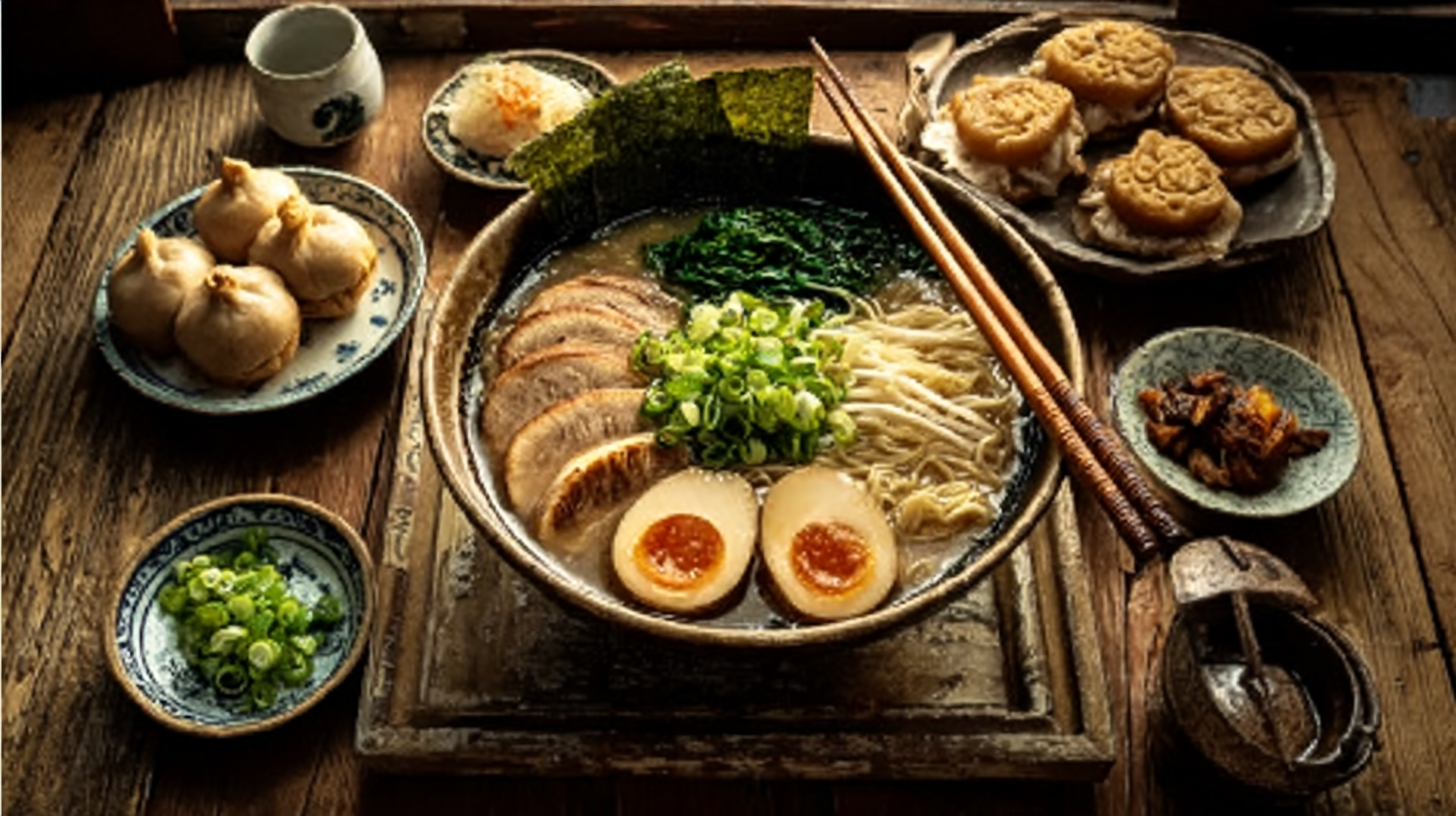
The Onomichi Dango Masayoshi Ramen Original is a dish steeped in Japanese culinary tradition, originating from the coastal town of Onomichi in Hiroshima Prefecture. Known for its shoyu-based (soy sauce) broth, flat wheat noodles, and luscious pork back fat (se-abura), this ramen is a delicate balance of richness and simplicity. The Masayoshi variant takes it further by honoring Dango-jiru (dumpling soup) traditions—infusing regional identity into every slurp.
In Japan, ramen is more than food—it’s a cultural ritual. Families bond over it, chefs specialize in it for decades, and food lovers travel miles to taste regional variations like this. But beneath the layers of savory umami lies a nourishing experience that—if prepared mindfully—can align with your wellness goals.
Table of Contents
Ingredient Table: Quantities, Measurements, and Calorie Breakdown
| Ingredient Item | Exact Quantity (Metric + Cups/Tsp) | Calories (Per Quantity) |
|---|---|---|
| Pork belly (chashu) | 150g (about 5.3 oz) | 518 kcal |
| Fresh ramen noodles | 120g (approx. 1 bundle) | 350 kcal |
| Soy sauce (shoyu) | 2 tbsp (30 ml) | 20 kcal |
| Pork back fat (se-abura) | 1 tbsp (15g) | 135 kcal |
| Kombu (kelp) | 5g (1 small sheet) | 10 kcal |
| Bonito flakes | 10g (2 tbsp loosely packed) | 36 kcal |
| Mirin | 1 tbsp (15 ml) | 45 kcal |
| Sake | 1 tbsp (15 ml) | 40 kcal |
| Garlic (sliced) | 2 cloves (6g) | 9 kcal |
| Ginger (sliced) | 10g | 8 kcal |
| Scallions (topping) | 2 tbsp (10g chopped) | 3 kcal |
| Soft-boiled egg | 1 whole | 68 kcal |
| Menma (fermented bamboo) | 2 tbsp (30g) | 15 kcal |
| Dried sardines (niboshi) | 10g | 42 kcal |
| Sesame oil | 1 tsp (5 ml) | 45 kcal |
| Nori (seaweed) | 1 sheet | 5 kcal |
| White pepper | ¼ tsp | 2 kcal |
| Spinach (blanched) | ¼ cup (30g) | 7 kcal |
👉 Total Calories Per Bowl: 1358 kcal
Science Behind the Bowl: Nutritional Breakdown
Let’s uncover the healthy (and not-so-healthy) elements inside this flavorful bowl.
Protein Power
-
Pork belly & egg deliver complete proteins necessary for muscle repair and immune health.
-
Dried sardines and bonito flakes offer omega-3 fatty acids and vitamin D.
Gut-Boosting Elements
-
Fermented menma and kombu provide probiotics and prebiotic fiber aiding digestion.
-
Soy sauce contains amino acids and fermentation byproducts that are good for your microbiome (when consumed moderately).
Watch for:
-
Pork back fat and sesame oil are calorie-dense.
-
Soy sauce contributes high sodium levels—consider lower-sodium versions.
Step-by-Step Cooking Instructions (With Pro Tips)
Step 1: Prepare the Dashi Broth Base
-
Soak kombu in 1L water overnight or for at least 1 hour.
-
Bring kombu water to a gentle simmer. Remove kombu just before boiling.
-
Add bonito flakes and dried sardines, simmer for 10 minutes, then strain.
Pro Tip: Don’t boil kombu—it turns slimy and bitter.
Step 2: Make the Chashu Pork
-
In a pan, sear pork belly until browned.
-
Simmer pork in a mix of soy sauce, mirin, sake, garlic, and ginger for 1 hour.
-
Let cool in liquid overnight for deeper flavor. Slice thinly.
Pro Tip: For restaurant-quality, torch or pan-sear the sliced chashu just before serving.
Step 3: Cook the Ramen Noodles
-
Boil water, add ramen noodles, and cook per packet directions (usually 2–3 minutes).
-
Drain and rinse briefly under hot water to remove excess starch.
Step 4: Prepare the Soft-Boiled Egg
-
Boil egg for 6 minutes, then plunge into ice water for 10 minutes.
-
Peel and marinate in leftover chashu sauce for at least 2 hours.
Step 5: Assemble the Bowl
-
Add 1 tbsp pork fat to the bowl.
-
Pour hot dashi broth over it (approx. 400ml per serving).
-
Add noodles, then top with:
-
Sliced chashu pork
-
Marinated soft egg
-
Spinach, menma, scallions, nori
-
Dash of white pepper and drizzle of sesame oil
-
Pro Tip: Always pour hot broth last, so fats emulsify and ingredients stay vibrant.
Calorie Optimization: 5 Easy Swaps for a Healthier Ramen
Even a decadent bowl like this can be tailored for wellness. Here’s how:
-
Swap Pork Belly for Chicken Thigh
-
Saves 250+ kcal and still offers juicy protein.
-
-
Use Less Pork Fat
-
Try ½ tbsp or eliminate altogether for a lighter broth.
-
-
Low-Sodium Soy Sauce
-
Reduces sodium load by 40% with minimal flavor sacrifice.
-
-
Add More Greens
-
Double the spinach or add blanched bok choy or kale.
-
-
Use Konjac or Whole-Grain Noodles
-
Lower carb and calorie content while increasing fiber.
-
💡 A modified bowl can go as low as 750–850 kcal.
FAQ: Frequently Asked Ramen Questions
How can I store leftovers?
-
Broth: Refrigerate up to 3 days or freeze up to 1 month.
-
Chashu: Store in marinade in fridge for 4–5 days.
-
Noodles: Best fresh, but can be kept refrigerated for 1–2 days.
What are good ingredient substitutions?
-
No kombu? Use shiitake mushrooms for umami.
-
No mirin? Use honey + rice vinegar combo.
-
No pork fat? Try olive oil with smoked paprika for depth.
Can I make this vegetarian?
Yes! Use:
-
Vegetable dashi (kombu + shiitake)
-
Tofu slices or tempeh
-
Plant-based egg or omit altogether
I’m watching my sodium. Any tips?
-
Dilute broth slightly with unsalted stock.
-
Opt for low-sodium soy sauce and miso.
-
Use fewer salty toppings like menma.
Final Thoughts
The Onomichi Dango Masayoshi Ramen Original isn’t just a meal—it’s a heartwarming experience blending heritage and harmony. With rich layers of flavor from sea to simmering pot, this bowl can be both soul-satisfying and nutritionally balanced.
Whether you’re a ramen purist or a health-conscious foodie, there’s always room to make this iconic dish your own. Cook with curiosity, season with intention, and savor each bite.