
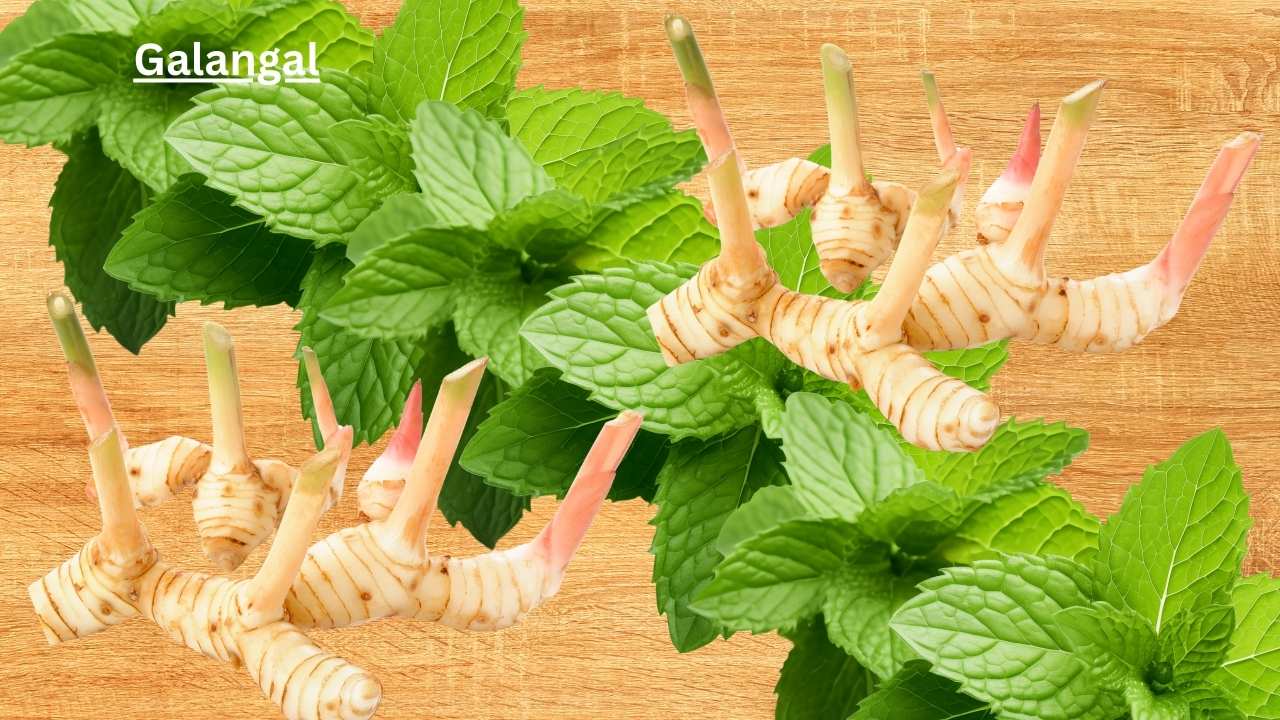
Galangal, the bold cousin of ginger, has dazzled Southeast Asian kitchens for centuries. Its sharp citrusy aroma, earthy warmth, and spicy bite make it a culinary treasure in Thai, Indonesian, and Malaysian cuisine. But this root isn’t just about flavor — galangal has been used in traditional medicine for ages to soothe inflammation, aid digestion, and spark vitality.
In this ultimate guide, we explore galangal’s origins, benefits, uses, and expert cooking tips, and help you harness its power with fewer calories and more nutrition. Ready to ignite your taste buds?
Table of Contents
Detailed Ingredient & Calorie Table
| Ingredient Item | Exact Quantity (Metric + Cups/tsp) | Calories (per listed quantity) |
|---|---|---|
| Fresh Galangal Root | 50g (approx. ¼ cup, chopped) | 35 kcal |
| Coconut Milk (light) | 200 ml (¾ cup) | 100 kcal |
| Lemongrass (chopped) | 10g (1 tbsp) | 4 kcal |
| Kaffir Lime Leaves | 4 leaves | 1 kcal |
| Thai Red Chili | 1 piece | 6 kcal |
| Garlic (minced) | 2 cloves (6g) | 9 kcal |
| Shallots (sliced) | 20g (2 tbsp) | 14 kcal |
| Lime Juice | 1 tbsp (15 ml) | 4 kcal |
| Fish Sauce | 1 tbsp (15 ml) | 10 kcal |
| Fresh Coriander | 10g (2 tbsp) | 2 kcal |
| Avocado Oil | 1 tbsp | 124 kcal |
| Sea Salt (to taste) | ½ tsp | 0 kcal |
| Jasmine Rice (cooked) | ½ cup (100g) | 130 kcal |
👉 Total Calories (per serving): ~439 kcal
Galangal’s Origins: Culture Meets Healing
Galangal isn’t just a spice — it’s a cultural icon across Southeast Asia. Known as “kha” in Thai and “lengkuas” in Malay, it’s a staple in:
-
Thai Tom Yum soups
-
Indonesian rendang
-
Malaysian laksa
-
Ayurvedic healing teas
With its peppery zing and citrus notes, galangal brings vibrancy and depth to any dish. Traditionally, healers used it to:
-
Soothe upset stomachs
-
Treat nausea
-
Reduce inflammation
-
Boost circulation
Its use as a digestive tonic and immunity booster still holds true in modern natural medicine.
Nutritional Breakdown: Small Root, Big Power
Galangal is low in calories but rich in essential oils, antioxidants, and active compounds like:
-
Galangin: An antioxidant with antibacterial properties
-
Alpinia: A natural anti-inflammatory
-
Flavonoids: Fight oxidative stress
-
Dietary fiber: Aids digestion and regulates blood sugar
Nutritional Values (Per 100g of Galangal Root):
-
Calories: 70 kcal
-
Carbohydrates: 15g
-
Fiber: 2g
-
Protein: 1g
-
Fat: 0.5g
-
Vitamin C: 5 mg
-
Iron: 1.3 mg
-
Potassium: 200 mg
💡 Its low glycemic index makes galangal great for diabetic-friendly dishes.
Cooking with Galangal: Pro Techniques & Flavor Tips
Galangal’s unique structure — tougher than ginger — demands some skill in the kitchen. Here’s how to prepare and unleash its full potential.
Step-by-Step Recipe: Thai Galangal Coconut Soup (Tom Kha Gai)
Ingredients:
-
50g fresh galangal (sliced into thin coins)
-
1 stalk lemongrass (bruised and chopped)
-
4 kaffir lime leaves (torn)
-
200ml light coconut milk
-
2 cloves garlic (minced)
-
1 red chili (sliced)
-
100g mushrooms or chicken (optional protein)
-
1 tbsp lime juice
-
1 tbsp fish sauce
-
Fresh coriander for garnish
Cooking Steps:
1. Sauté aromatics
Heat 1 tbsp avocado oil in a pan. Add garlic, shallots, and galangal. Sauté until fragrant (about 2 minutes).
2. Add lemongrass, chili, and lime leaves
These enhance the citrusy undertone. Stir for 1 minute.
3. Pour in coconut milk and simmer gently
Let the flavors infuse for 8–10 minutes on low heat. Don’t boil coconut milk — it can split.
4. Add protein (optional)
If adding mushrooms or chicken, simmer until cooked through.
5. Finish with lime juice and fish sauce
Taste and adjust saltiness. Add more lime for tang.
6. Garnish and serve hot
Top with fresh coriander and serve with steamed jasmine rice.
Pro Tips:
-
Always slice galangal thinly; it’s fibrous and woody.
-
Don’t eat galangal slices whole — they’re mainly for flavor infusion.
-
Pair with lemongrass and lime for authentic Southeast Asian profiles.
-
Use a mortar and pestle for making curry pastes with galangal, chili, and garlic.
5 Ways to Make Galangal Recipes Healthier
Love the flavor but want fewer calories or more nutrition? Here are expert swaps:
-
✅ Use light coconut milk
Cuts fat without compromising creaminess. -
✅ Replace fish sauce with low-sodium soy sauce
Keeps sodium in check and makes it vegetarian-friendly. -
✅ Add lean protein like tofu or chicken breast
Enhances satiety without excess calories. -
✅ Skip cooking oil; dry sauté spices
Use a non-stick pan or a splash of water instead of oil. -
✅ Serve with quinoa or brown rice
Adds fiber and lowers the glycemic impact.
Galangal FAQ: Everything You Need to Know
How to Store Fresh Galangal?
-
Refrigerator: Wrap in paper towel and keep in a zip bag. Lasts up to 3 weeks.
-
Freezer: Slice into coins, flash-freeze on a tray, then store in a freezer-safe bag.
-
Dry form: Available as powdered galangal — use ½ tsp for every 1 tbsp of fresh root.
What’s a Good Galangal Substitute?
-
Ginger + Lime Zest (Best Sub)
Mix 1 part ginger with a dash of lime zest to mimic galangal’s peppery-citrus flavor. -
Turmeric (for color)
Add a pinch to bring warmth to curries.
Is Galangal Good for Diet Plans?
Absolutely. Galangal is:
-
Gluten-free
-
Dairy-free
-
Low-calorie
-
Keto-friendly
-
Paleo and Whole30 compliant
It fits seamlessly into most diets and boosts flavor without added fat or sugar.
Why Every Kitchen Needs Galangal
Galangal is more than a spice — it’s a healing hero and culinary game-changer. From Tom Kha soups to Indonesian satay marinades, it delivers fiery aroma, medicinal value, and unmatched depth.
Whether you’re cooking Southeast Asian favorites or just want to spice up your wellness routine, galangal is your go-to root for a burst of bold, vibrant flavor.
Quick Recap: Health Perks of Galangal
-
Aids digestion and reduces bloating
-
Fights inflammation and joint pain
-
Antioxidant-rich for immune support
-
Calms nausea (great for pregnancy and travel)
Final Thought for Mobile Readers
Short on time? Just remember:
“Ginger warms, but galangal awakens.” 🌱
Add a slice to your next soup or tea and feel the zing.