
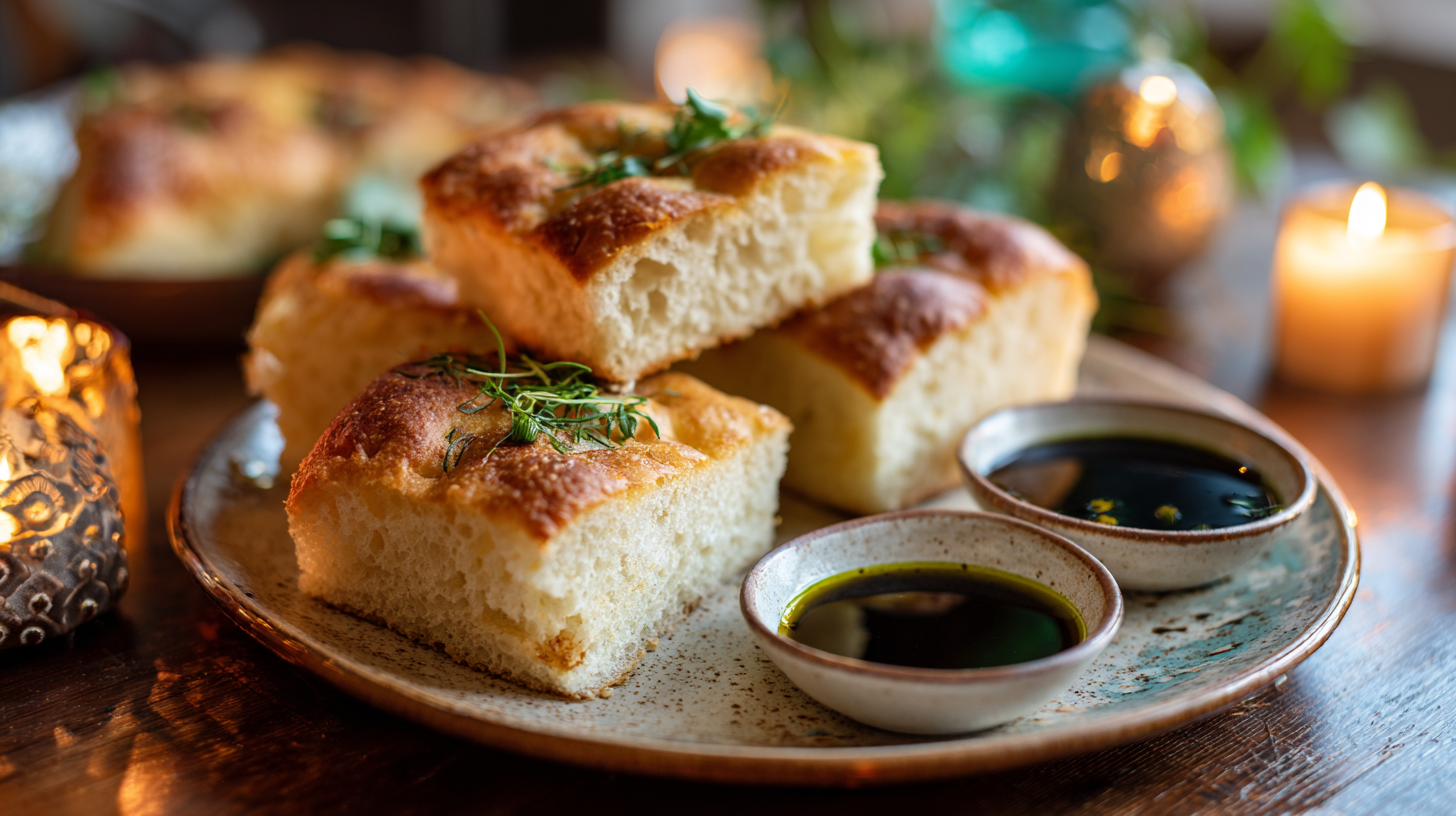
Focaccia, with its pillowy softness, olive oil-rich crust, and delightfully golden dimples, is more than just bread—it’s a celebration of texture and flavor. And when it comes to mastering this Italian staple, no one does it better than Samin Nosrat, author of Salt, Fat, Acid, Heat. Her focaccia recipe is beloved for its simplicity and stunning results.
But beyond the crisp crust and chewy interior lies a deeper story—of culture, nutrition, and technique. Let’s dive into the heart of this rustic Italian bread.
Table of Contents
Ingredient Table & Calorie Breakdown
| Ingredient Item | Exact Quantity (Metric + US Cups/Tsp) | Calories (Per Listed Quantity) |
|---|---|---|
| All-purpose flour | 500g (4 cups) | 1,820 kcal |
| Warm water | 400g (1¾ cups) | 0 kcal |
| Active dry yeast | 2¼ tsp (7g) | 21 kcal |
| Kosher salt (for dough) | 10g (2 tsp) | 0 kcal |
| Olive oil (in dough) | 25g (2 tbsp) | 220 kcal |
| Olive oil (for pan + top) | 40g (3 tbsp) | 320 kcal |
| Flaky sea salt (for garnish) | 1 tbsp (15g) | 0 kcal |
| Optional rosemary garnish | 1 tbsp, fresh leaves | 2 kcal |
| Optional garlic slices | 2 cloves, thinly sliced | 9 kcal |
| Total Calories (1 loaf) | — | 2,392 kcal |
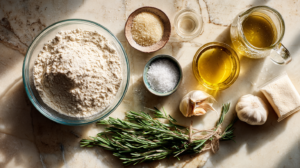
💡 Makes 12 slices = ~199 kcal per slice
Introduction: Culture & Wellness of Focaccia
Focaccia dates back to ancient Rome, where flatbreads were staples of communal tables. Originally baked on the hearth (Latin: focus), this rustic bread spread throughout Italy with regional twists—Genovese focaccia with rosemary and oil, Pugliese with tomatoes and olives.
Why Focaccia Matters
-
Cultural connection: Focaccia is often associated with family meals and festivities. It’s warm, shareable, and comforting.
-
Nutritional advantage: Made from basic ingredients—flour, water, yeast, salt, and olive oil—it’s free from additives and preservatives.
-
Versatility: Served as an appetizer, sandwich base, or side dish. It adapts well to various diets and preferences.
Nutritional Science: Key Ingredients & Health Benefits
Flour (All-Purpose)
-
Provides complex carbohydrates for energy
-
Contains protein (~10-12%), crucial for dough elasticity
-
Can be swapped for whole wheat for added fiber
Salt
-
Balances flavor and strengthens gluten
-
Essential for fermentation control
Yeast
-
Converts sugars into CO₂, causing the dough to rise
-
Adds B vitamins and beneficial enzymes
Olive Oil
-
Rich in heart-healthy monounsaturated fats
-
Contains polyphenols and antioxidants
-
Adds flavor, tenderness, and crispness
Optional Additions (Garlic, Rosemary)
-
Garlic: antimicrobial, rich in allicin
-
Rosemary: boosts memory, contains anti-inflammatory compounds
Step-by-Step Cooking Instructions: Mastering Nosrat’s Focaccia
Ready to create focaccia that sings with flavor and texture? Here’s how to do it, Samin-style, with professional tips woven in.
Step 1: Activate the Yeast
In a large bowl, combine:
-
400g warm water (just above body temp)
-
2¼ tsp active dry yeast
Let sit for 10 minutes until bubbly.
🧠 Chef’s Note: The water should be warm—not hot—or it’ll kill the yeast.
Step 2: Mix the Dough
To the yeast mixture, add:
-
500g flour
-
2 tsp kosher salt
-
2 tbsp olive oil
Mix with a spatula or hands until just combined. Dough will be shaggy and sticky.
Bold Technique: Don’t overmix—gentle folding preserves hydration and allows for better gluten development later.
Step 3: Let it Rest (Long Fermentation)
Cover the bowl with plastic wrap or a damp towel and let it rise for 12–14 hours at room temperature (overnight works best).
💤 Why it matters: Long, cold fermentation develops deeper flavor and improves digestibility.
Step 4: Prepare the Pan
Generously coat a 9×13-inch pan with:
-
2 tbsp olive oil
Then pour in the rested dough and gently stretch to the edges. Let it rest for another 2–3 hours.
Step 5: Dimple & Garnish
Coat your hands with olive oil. Press fingertips deep into the dough to create those iconic dimples. Top with:
-
1 tbsp flaky salt
-
Optional rosemary or garlic slices
🧄 Professional Tip: Infuse olive oil with garlic beforehand for an aromatic punch.
Step 6: Bake to Perfection
Bake at 230°C (450°F) for 22–25 minutes or until:
-
Golden brown crust
-
Crispy edges
-
Soft, bubbling surface
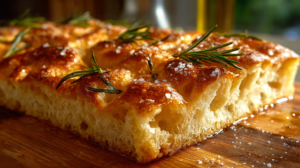
Cool slightly, slice, and serve warm or at room temperature.
Calorie Optimization: 5 Ways to Make Focaccia Healthier
If you’re watching your calories or macros, here are simple swaps and strategies:
-
Use whole wheat flour
Adds fiber and protein, lowers glycemic impact. -
Cut the olive oil by 25%
Try 1.5 tbsp in dough and 2 tbsp total for topping/pan. -
Add vegetables
Sliced cherry tomatoes, onions, or zucchini = more nutrients and fiber. -
Use less salt topping
Flavor with herbs (thyme, oregano, basil) to reduce sodium. -
Smaller portions
Cut into 16 pieces for ~150 kcal per serving.
FAQ: Samin Nosrat Focaccia Recipe
Q1: How do I store leftover focaccia?
Wrap in foil or an airtight container. Store:
-
Room temp: 1–2 days
-
Fridge: Up to 5 days (reheat before serving)
-
Freezer: Up to 2 months (slice and wrap individually)
Q2: Can I substitute all-purpose flour?
Yes. Try:
-
Bread flour: Chewier texture
-
00 flour: Softer crumb
-
Whole wheat flour: Earthier flavor, more nutrients
Q3: Is it vegan?
Absolutely. All ingredients in the classic recipe are plant-based. Just ensure any toppings added (like cheese) are vegan too.
Q4: Can I make it gluten-free?
Yes, but with a specialty gluten-free flour blend. Add ½ tsp xanthan gum for structure. Results will vary—expect a slightly denser texture.
Q5: Can I skip the long fermentation?
You can, but you’ll lose flavor. If rushed, let rise for 2 hours, then proof 1 more hour in the pan.
Final Thoughts: Why This Recipe Endures
Samin Nosrat’s focaccia recipe isn’t just a step-by-step guide—it’s a masterclass in respecting ingredients and allowing time to enhance flavor. The result is a deeply satisfying bread that’s crisp on the outside, cloud-like on the inside, and infinitely customizable.
Whether you’re hosting a gathering, building a sandwich, or enjoying it plain with olive oil, focaccia is food for the soul—and this recipe is your gateway.
Total Nutrition Recap (Full Loaf)
-
Total Calories: 2,392 kcal
-
Fat: ~42g
-
Carbs: ~420g
-
Protein: ~48g
-
Fiber: ~12g (can be higher with whole wheat)