
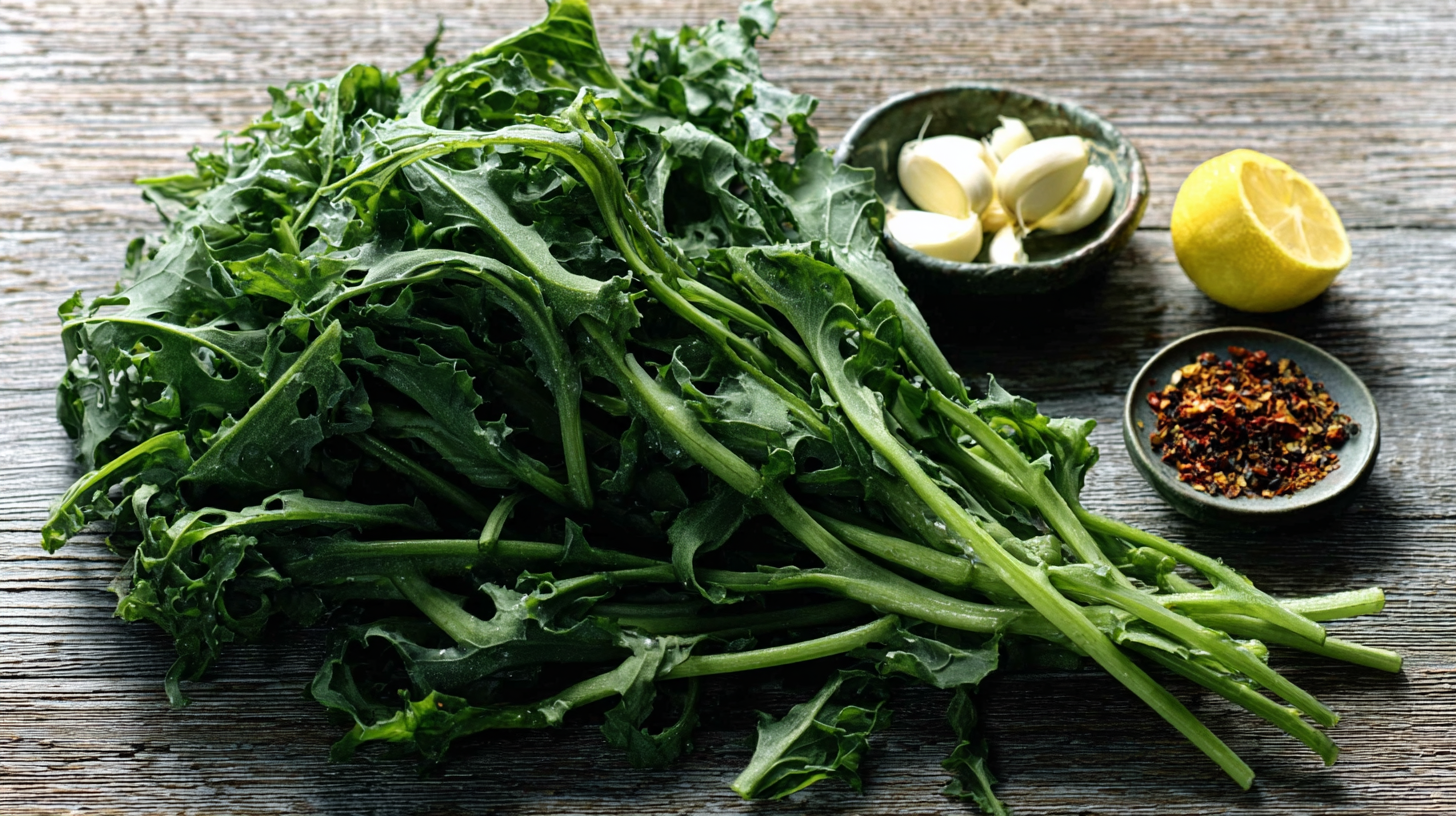
Spigarello, often hailed as the Italian heirloom cousin of broccoli, is making a comeback in kitchens worldwide. With its tender, curly leaves and a flavor reminiscent of sweet broccoli and kale, this leafy green is a culinary gem. Whether sautéed, roasted, or braised, Spigarello offers a uniquely earthy yet slightly nutty taste that pairs beautifully with a variety of dishes.
This guide dives into its cultural roots, nutritional value, pro cooking methods, calorie optimization tips, and more—perfect for foodies, health-conscious cooks, and gardeners alike.
| Ingredient Item | Exact Quantity (Metric + Cups/Tsp) | Calories (per listed quantity) |
|---|---|---|
| Fresh Spigarello leaves | 300g (approx. 6 packed cups) | 105 kcal |
| Garlic (minced) | 3 cloves (9g) | 13 kcal |
| Olive oil (extra virgin) | 2 tbsp (30ml) | 238 kcal |
| Lemon juice (fresh) | 1 tbsp (15ml) | 4 kcal |
| Red chili flakes | ¼ tsp (1g) | 3 kcal |
| Sea salt | ¼ tsp (1.5g) | 0 kcal |
| Cracked black pepper | ¼ tsp (1g) | 2 kcal |
| Parmesan (optional garnish) | 1 tbsp grated (5g) | 21 kcal |
🔢 Total Calories (for full recipe): 386 kcal
Spigarello, also known as Cavolo Broccolo a Getti di Napoli, hails from Southern Italy, particularly the Campania and Naples regions. Traditionally grown in family gardens, it was cherished in peasant cooking for its resilience, nutritional density, and gentle flavor.
Today, it’s regaining popularity in California farmer’s markets and high-end restaurants, often featured in Michelin-starred menus. Its cultural heritage ties closely to the Mediterranean diet, praised for promoting longevity and reducing inflammation.
Table of Contents
Nutritional Breakdown: The Science Behind Spigarello
Spigarello is not just flavorful—it’s a powerhouse of nutrients. Here’s what 100g offers:
-
Vitamin A: 2000 IU – boosts vision and immune health
-
Vitamin C: 55mg – supports skin health and iron absorption
-
Calcium: 100mg – aids bone strength
-
Iron: 1.2mg – supports blood oxygenation
-
Fiber: 3g – aids digestion and satiety
-
Antioxidants: Rich in lutein and beta-carotene, helps fight cellular damage
Nutritional Note: Spigarello is a non-heading broccoli, so it’s lower in sugars than traditional broccoli and easier to digest than kale. Perfect for gluten-free, keto, paleo, and vegan diets!
Step-by-Step: Chef’s Guide to Cooking Spigarello
This recipe brings out Spigarello’s best texture and flavor. Use a cast-iron pan or wide skillet for the perfect sauté.
Ingredients:
(Refer to the ingredient table above.)
🔪 Preparation:
-
Wash Spigarello thoroughly under cold water and pat dry.
-
Trim stems if woody; otherwise, slice leaves and tender stems into 2-inch pieces.
-
Mince garlic finely. Set all ingredients ready in mise-en-place.
Cooking Instructions:
-
Heat olive oil in a skillet over medium heat.
-
Once hot, add minced garlic. Sauté for 30 seconds, stirring constantly—do not burn!
-
Add Spigarello and stir to coat leaves evenly in garlic oil.
-
Sprinkle in salt, pepper, and chili flakes.
-
Sauté for 4–5 minutes, until leaves are wilted but still vibrant green.
-
Turn off heat, drizzle lemon juice, and toss.
-
Optional: Garnish with grated parmesan or toasted pine nuts.
Pro Chef Tips:
-
Blanching Spigarello for 30 seconds in boiling water before sautéing will reduce bitterness.
-
Add a splash of vegetable broth during sauté for a velvety texture.
-
Use lemon zest for extra brightness without added calories.
Calorie Optimization: 5 Ways to Make It Healthier
Want to enjoy Spigarello without worrying about the calories? Here are smart tweaks:
-
Reduce Olive Oil
-
Cut to 1 tbsp = Save 119 kcal
-
Use a non-stick ceramic pan to reduce sticking
-
-
Skip the Parmesan Garnish
-
Save 21 kcal
-
Instead, sprinkle nutritional yeast for a cheesy flavor
-
-
Steam Instead of Sauté
-
Eliminates oil = Save 238 kcal
-
Add flavor with herb-infused broth or lemon-pepper mist
-
-
Add Chickpeas for Plant Protein
-
Boost satiety without heavy fats
-
½ cup adds 120 kcal but includes 6g fiber and 7g protein
-
-
Pair with Quinoa or Brown Rice
-
A low-fat grain side balances the dish
-
Keeps you full longer without overloading fats
-
FAQs: All About Spigarello
How Do I Store Spigarello?
-
Wrap in damp paper towels and place in a perforated bag in the fridge.
-
Best used within 4–5 days for peak flavor and nutrients.
Can I Substitute It?
-
Yes! Substitute with:
-
Broccoli rabe (rapini) – more bitter, slightly tougher
-
Tuscan kale (Lacinato) – similar texture, stronger flavor
-
Collard greens – more earthy, cook longer
-
Can I Eat It Raw?
-
You can, but it’s best blanched or lightly sautéed for tenderness.
-
Try finely slicing it into massaged salads with lemon and olive oil.
Is It Keto or Paleo Friendly?
-
Absolutely. Low in carbs, high in fiber and micronutrients.
-
Perfect for keto, paleo, Whole30, and clean-eating plans.
Where Can I Buy Spigarello?
-
Found at:
-
Farmer’s markets (especially in California, Oregon, and Italy)
-
Specialty stores like Whole Foods or co-ops
-
Online heirloom seed vendors if you want to grow your own
-
Final Thoughts: Why Spigarello Deserves a Spot in Your Kitchen
Spigarello isn’t just another leafy green—it’s a culinary treasure rooted in tradition, offering both flavor and function. With its versatility, rich nutrient profile, and gentle taste, it’s ideal for adventurous cooks and healthy eaters alike.
Whether you’re topping a pizza, folding it into an omelet, or giving it center stage in a sauté pan, Spigarello adds a rustic, elegant flair that transforms any dish.
Quick Recap:
✅ Total Calories (1 recipe): 386 kcal
✅ Easy to modify: steam, roast, or grill
✅ Great for: vegans, low-carb eaters, and Mediterranean food lovers
✅ Keywords naturally included: Spigarello, Spigarello recipe, Spigarello nutrition, how to cook Spigarello, healthy Spigarello dish